Phinisi vs Steel, Gulet and Catamaran
Hull-by-hull comparison for Indonesian waters: maintenance, resale, charterability and interiors of phinisi versus steel, gulet and catamaran.

Choosing between a phinisi, a steel expedition yacht, a gulet and a catamaran for Indonesian waters comes down to four trade-offs: maintenance burden, resale market, charter appeal and interior volume. Each hull wins somewhere. This page puts the comparison in one matrix, then goes deeper on the two questions buyers ask most — upkeep economics and interiors — from a buyer’s seat, not a charterer’s.
The Hull Matrix
| Factor | Phinisi (ironwood) | Steel Hull | Gulet (pine/oak) | Catamaran (GRP) |
|---|---|---|---|---|
| Purchase band (USD) | 150K – 6.8M+ | 500K – 5M | 250K – 2M | 300K – 3M |
| Annual upkeep vs value | 10–15% | 8–12% | 10–16% in tropics | 6–10% |
| Yard availability in Indonesia | Everywhere | Surabaya, Batam | Limited skills | Bali, Batam |
| Charter identity in Indonesia | The icon — sells itself | Expedition niche | Mediterranean import | Modern family market |
| Resale audience | Regional + international | International niche | Thin in Asia | Global and liquid |
| Guest capacity per LOA | High volume | Moderate | High aft-deck living | Highest per metre |
Maintenance: Wood vs Everything Else
The honest version of the wooden-boat question: an ironwood phinisi costs more hours, not necessarily more money. Ulin and teak resist rot and worm remarkably; what they demand is rhythm — annual haul-out, caulking and fastening checks, varnish cycles. In Indonesia that labour is affordable and available in every port, which is precisely why the phinisi remains rational here and irrational in Europe. Steel trades caulking for blasting and coating cycles at fewer, better-equipped yards. GRP catamarans carry the lowest routine burden but punish tropical osmosis neglect. Gulets suffer most: softwood construction in tropical heat, far from the Turkish yards that know them. Run a fiberglass-versus-wood cost comparison over ten years in Indonesia and the phinisi’s labour advantage largely closes the materials gap — resale identity then breaks the tie.
Interiors: Where the Phinisi Quietly Wins
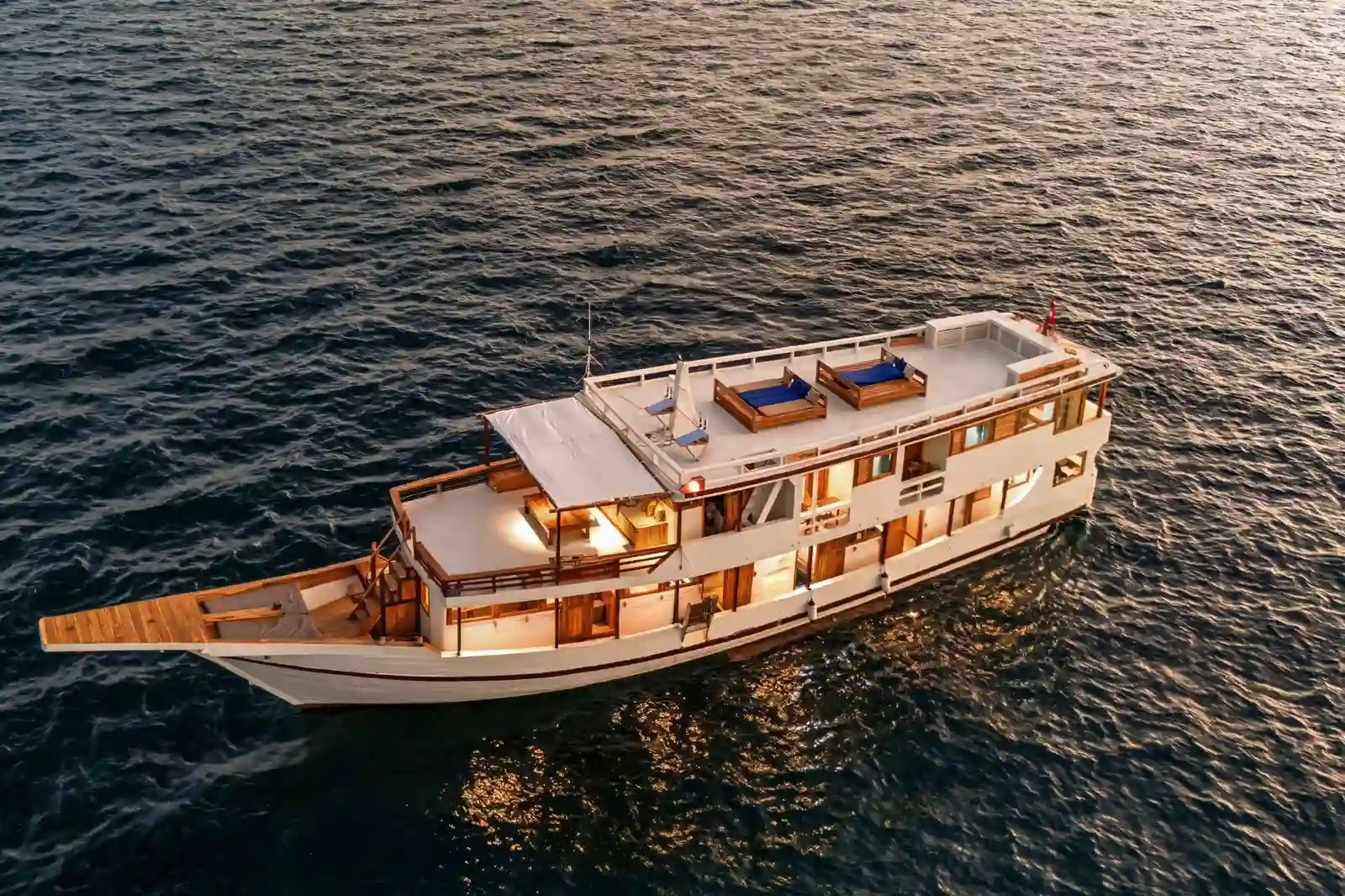
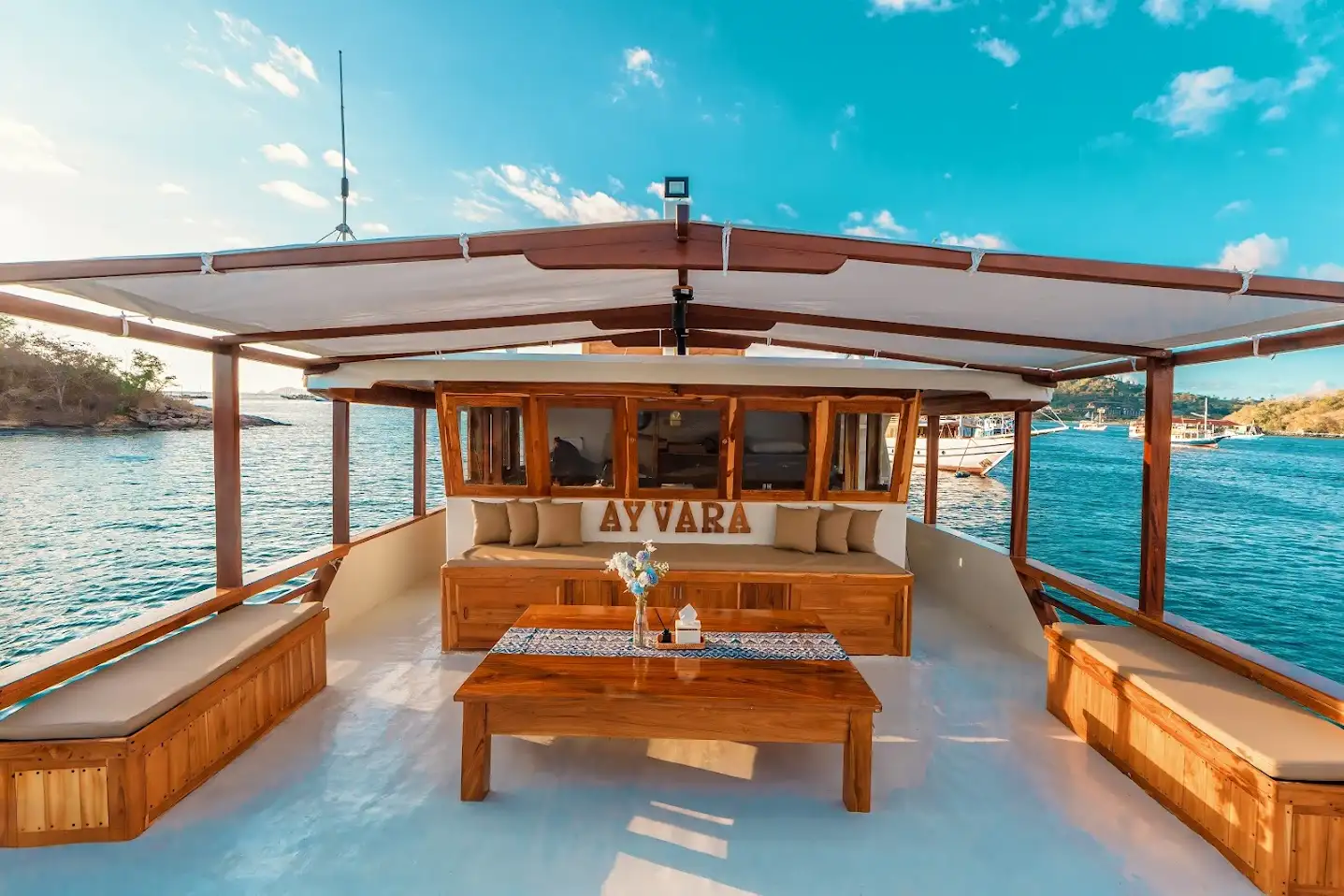
Phinisi interiors are the segment’s underrated strength: the traditional hull form gives extraordinary beam and headroom for the length, and Indonesian joinery culture executes warm, hand-built cabins at costs European yards cannot approach. A designed phinisi interior — solid teak, rattan, stone bathrooms — has become a recognizable luxury signature in its own right, one the charter market photographs relentlessly. Catamarans answer with light-filled apartment logic; steel with engineered efficiency; gulets with the aft-deck dining that defined Aegean chartering. In the interior-per-dollar contest in Indonesian yards, the phinisi wins on craft and character, and interiors are where yacht-grade builds put much of their premium.
Which Hull for Which Owner
- Charter business in Indonesian waters: phinisi, and it is not close — the vessel is the destination’s icon and books accordingly. The numbers live in our phinisi investment numbers.
- Long-range private expedition (Banda, Papua, beyond): steel first, big ironwood schooner second; range and repairability at sea decide it.
- Family private use with minimal crew: catamaran — the running-cost and handling logic is hard to argue with, whatever it lacks in romance.
- Mediterranean-style deck living on a budget: a well-surveyed gulet, bought knowing its tropical maintenance penalty and thin Asian resale.
Whichever hull you land on, the purchase discipline is identical — survey, escrow, documents — and pricing your candidate against its class band starts at the price bands by grade.
The Question Behind the Question
When a buyer asks “which hull?”, the operational question underneath is usually “which life?” — a charter business has different mathematics from a family plan, and an expedition dream from a sunset mooring. Answer the life question first and the hull table above mostly fills itself in; answer the hull question first and the life gets retrofitted to a purchase, which is the expensive order. Our practice: an hour on the operating plan before a minute on listings.
Comparison decided? Two doors from here: the phased purchase mandate for the process, or gulet and schooner listings currently open if the alternative rig won.
Frequently Asked Questions
Is a wooden phinisi more expensive to maintain than a fiberglass yacht?
In hours, yes; in Indonesian money, less than buyers fear. Budget 10–15% of vessel value annually for a phinisi versus 6–10% for GRP — but phinisi labour is available in every Indonesian port at local rates, while serious GRP and steel work concentrates at a few yards. Over ten years the gap narrows sharply.
What are the real differences between a phinisi and a gulet?
Timber, climate fit and market. Phinisi are ironwood-built for tropical waters with a repair ecosystem across Indonesia; gulets are pine-on-oak Mediterranean boats that age faster in tropical heat with few local specialists. For Indonesian ownership, the phinisi is the structurally rational choice; the gulet is a style preference with a maintenance surcharge.
Phinisi or schooner — which is better for actual sailing?
A true schooner rig sails; most phinisi motor-sail, using the rig for steadying and silhouette. If passage-making under canvas is the point, buy a properly rigged schooner and budget for real rigging surveys. If range, volume and Indonesian charter identity are the point, the phinisi wins comfortably.
Which hull type holds resale value best in Southeast Asia?
Catamarans are the most liquid globally; a documented, well-maintained phinisi holds value best within the region because the charter market constantly needs them. Steel finds fewer but serious buyers. Gulets are hardest to resell in Asia — buy one for use, not for exit.
Can I convert my hull decision later if the plan changes?
Only by selling and rebuying — hulls do not convert. That is the strongest argument for answering the operating-plan question honestly before purchase: the exit cost of a wrong hull choice is a full transaction cycle, while the entry cost of an extra planning week is a coffee budget.
Debating hull types for your plan? Talk it through with a buyer’s agent: WhatsApp +62 811-3941-4563 or bd@juaraholding.com.