Owner Operating Economics for a 45m Charter Phinisi Yacht
Annual operating cost runs USD 720K-950K for a 45m / 7-cabin charter phinisi. Net charter yield 8-29% on acquisition. Compare to comparable Western yacht 30-50% lower operating cost. The detailed cost stack and yield model.
- Annual operating cost
- USD 720K-950K
- Net charter yield on acquisition
- 8-29%
- Lower operating cost than comparable Western yacht
- 30-50%
Reference Vessel Profile
Annual operating cost of a 45m phinisi runs USD 720,000-950,000 covering crew salaries (USD 280k for 10 crew), provisioning + fuel + harbour fees (USD 220k), maintenance + refit reserve (USD 180k), insurance (USD 95k), marketing + booking (USD 130k), permits + compliance (USD 25k), and tender + dive equipment (USD 35k). Comparable Western yacht runs USD 1.4-1.9M annually.
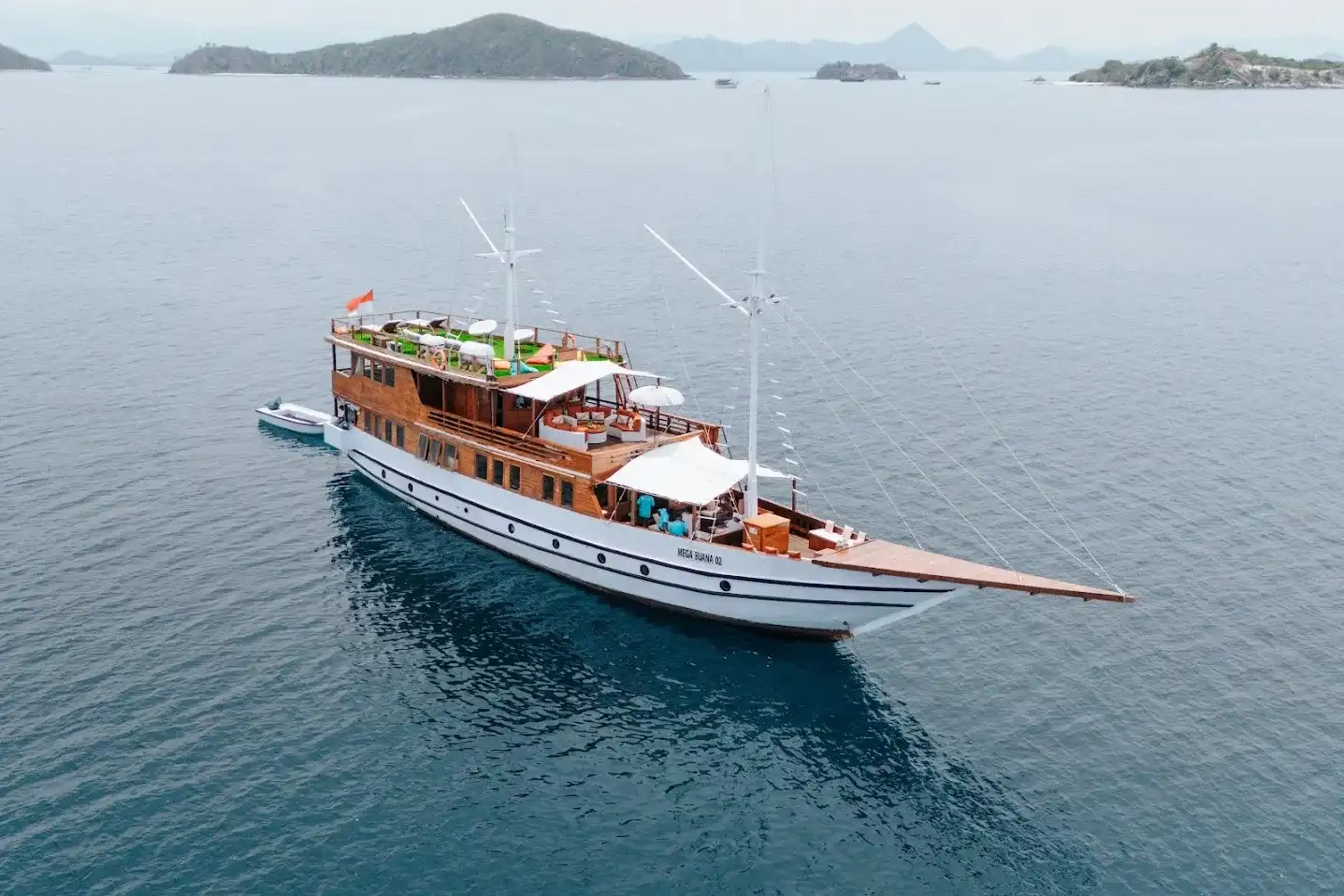
For concreteness, we model annual operating economics for a representative vessel: 45 metres LOA, 7 guest cabins (12-14 guests max), 10 crew positions, Bira-built 2021-2024, currently operating in Komodo Luxury managed fleet at 22-28 charter weeks per year. Acquisition cost USD 2.8-3.4M depending on specification and condition. Annual operating cost stack as follows.
- LOA
- 45 metres LOA
- Guest cabins
- 7 guest cabins (12-14 guests max)
- Crew
- 10 crew positions
- Built
- Bira-built 2021-2024
- Occupancy
- 22-28 charter weeks per year
- Acquisition cost
- USD 2.8-3.4M depending on specification and condition
Crew Compensation (USD 280K total)
| Position | Headcount | Monthly USD | Annual USD |
|---|---|---|---|
| Captain (Class III certified) | 1 | 2,200-3,800 | 26,400-45,600 |
| Chief engineer | 1 | 1,400-2,200 | 16,800-26,400 |
| Second engineer | 1 | 900-1,400 | 10,800-16,800 |
| Bosun + 3 deckhands | 4 | 600-950 | 28,800-45,600 |
| Chef | 1 | 1,800-3,000 | 21,600-36,000 |
| Sous chef | 1 | 900-1,500 | 10,800-18,000 |
| 2 stewards | 2 | 600-1,600 | 14,400-38,400 |
| Divemaster | 1 | 1,400-2,200 | 16,800-26,400 |
| Total base salary | 12 | — | ~USD 200K |
| Plus charter tips (~10% of charter fee) | — | — | USD 80K-180K |
Annual operating cost stack as follows.
Provisioning, Fuel, Harbour
Provisioning at charter-grade specification (organic vegetables, sustainably sourced seafood, premium spirits) runs USD 180-280 per guest per day. For 22 charter weeks at 12 guests average, that’s USD 270K-420K provisioning gross. Charter contracts typically include provisioning at fee that recovers 60-75% of cost from charter revenue, leaving USD 70K-120K net cost annual. Fuel runs USD 35K-55K (variable with itinerary; Komodo loops use less than Raja Ampat repositioning seasons). Harbour fees, marina dockage, and port clearance approximately USD 35K-60K annual depending on operating areas.
Maintenance + Refit Reserve
Annual maintenance covers routine work: caulking inspection and remediation (USD 25K), rigging inspection and replacement components (USD 20K), engine servicing (USD 18K), generator servicing (USD 8K), watermaker membrane replacement (USD 6K), electronics calibration (USD 12K), interior touch-up (USD 15K), tender and dive equipment maintenance (USD 18K). Plus refit reserve accrual at USD 60-80K/year toward 5-year major refit (typically USD 280K-450K total).
Insurance
Hull insurance with Indonesian or Singapore-based marine insurer typically 1.4-1.8% of insured value annually. For 45m phinisi insured at USD 2.8M, that’s USD 39K-50K annual hull premium. Plus liability insurance USD 18K-25K, charter passenger liability USD 15K-22K, business interruption USD 10K-18K. Total around USD 95K annual.
Marketing + Booking + Management Fee
For yachts in Komodo Luxury managed fleet, marketing and booking are included in the management fee structure. Standard managed fleet structure: Komodo Luxury captures 18-22% of gross charter revenue covering marketing, booking platform integration, charter operations management, crew supervision, and quality assurance. For yacht generating USD 1.85M gross charter, that’s approximately USD 350K to Komodo Luxury, of which approximately USD 130K-160K is allocated against marketing/booking line items in our model (rest covers operations management).
Permits + Compliance
Indonesian flag commercial yacht permits (annual), park entry fee pre-purchases, sailing permits per cruising area, customs declarations for imported provisioning, tax compliance filing, and insurance/safety inspection compliance. Total around USD 25K annual.
Tender + Dive Equipment
Tender (typically 6-9m RIB) maintenance and replacement reserve. Dive equipment (compressor, tanks, BCDs, regulators, masks/fins for guest use) maintenance, replacement, and certification. SUP boards, kayaks, snorkel equipment.
Total Annual Operating Cost Summary
| Category | USD Annual |
|---|---|
| Crew compensation | 280,000 |
| Provisioning + fuel + harbour | 220,000 |
| Maintenance + refit reserve | 180,000 |
| Insurance | 95,000 |
| Marketing + booking + management | 130,000 |
| Permits + compliance | 25,000 |
| Tender + dive equipment | 35,000 |
| Total operating cost | ~USD 965,000 |
| Range across vessels we manage | USD 720,000 – 950,000 |
Revenue Side
Charter rates for premium 45m phinisi in Indonesia 2026: low-season USD 14,000-18,000 per night (2-3 night minimums for short cruises), shoulder USD 18,000-24,000 per night, high-season USD 22,000-32,000 per night. Annual gross charter revenue for well-positioned 45m vessel at 22-28 weeks/year occupancy typically USD 1.4M-2.4M.
Net Yield Math
Mid-case: USD 1.85M gross revenue minus USD 850K operating cost = USD 1.0M net to owner pre-tax. On USD 3.0M acquisition, that’s 33% pre-tax yield. Post-tax (Indonesian PMA structure, dividend distribution to foreign principal) yields run 8-29% net depending on tax structure and operating performance. Mature operations (Year 2+) generally land 12-22%.
Frequently Asked Questions
01How does the operating cost change with vessel size?
Operating cost scales sub-linearly with vessel length. 38m vessel runs USD 480-640K annual. 45m runs USD 720-950K. 52m runs USD 920-1,180K. 58m superyacht runs USD 1.05-1.45M. Larger vessels carry more crew (cost component), more fuel (cost), more harbour fees (cost) but also command higher charter rates (revenue) so the net yield math holds.
01Can a single phinisi run multiple operating models simultaneously?
Possible but uncommon. Most phinisi commit to one operating model: pure private use (no charter), private-with-incidental-charter (15-20 weeks/year offset), or full charter operation (22-28 weeks/year). Mixed models create scheduling friction and reduce both private experience quality and charter revenue. We recommend single-model commitment with annual review.
Navigating Indonesia’s intricate marine operational environment
The scent of saltwater and teak wood fills the air as your Phinisi glides through the cerulean waters of Raja Ampat, a testament to meticulous planning and dedicated operation. Beyond the initial acquisition, understanding the nuances of managing a luxury charter Phinisi in Indonesia is key to realizing its full potential as both a profitable venture and an exceptional lifestyle asset.
Operating a luxury Phinisi in the vast Indonesian archipelago presents a unique set of challenges and advantages compared to traditional Western yachting. With over 17,500 islands, logistics for provisioning, fuel, and specialized maintenance require deep local knowledge and established networks. Owners benefit immensely from experienced local captains and crew who not only possess intimate understanding of the diverse cruising grounds, from the currents of Komodo to the remote bays of West Papua, but also navigate cultural intricacies with ease.
A well-run Phinisi operation emphasizes proactive maintenance and strong supplier relationships. Sourcing high-quality spare parts and services in remote areas demands foresight. Many successful operators establish partnerships with local shipyards and workshops in key hubs like Bali or Sulawesi, ensuring that the vessel remains in pristine condition, ready to deliver exceptional guest experiences without unexpected delays. This localized approach often translates to efficient problem-solving and cost-effectiveness in the long run.
Strategic chartering for optimal yield and guest satisfaction
Maximizing the net charter yield for your Phinisi involves more than just setting a daily rate; it requires strategic market positioning and an understanding of the luxury travel segment. High-end clients seek bespoke itineraries, exceptional service, and exclusive access to Indonesia’s most pristine marine environments. Crafting unique experiences, such as diving with manta rays in Komodo or exploring the hidden lagoons of Misool, drives demand and justifies premium pricing.
Seasonality plays a crucial role in charter planning. While Komodo National Park sees its peak season from April to October, destinations like Raja Ampat typically thrive from October to April, allowing for a strategic repositioning to capture year-round bookings. Successful operators often leverage a mix of direct bookings, high-end travel agencies, and specialist yacht charter brokers to maintain a robust booking calendar, targeting an average charter duration of 7-10 nights for optimal efficiency and guest immersion. Explore more about Indonesia’s diverse destinations at Indonesia.travel.
Preserving the legacy and value of your Phinisi asset
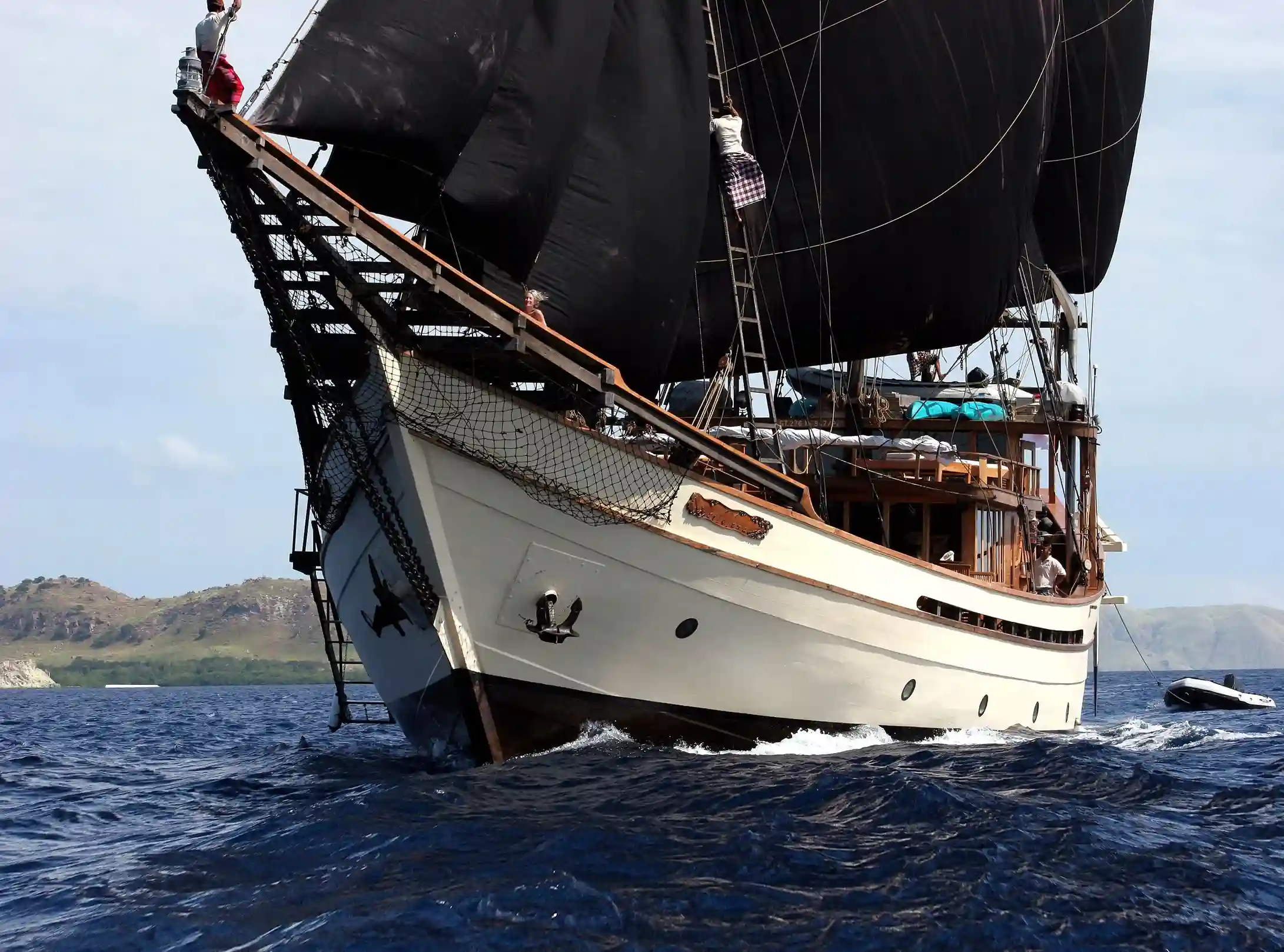
The enduring appeal of a Phinisi lies not just in its luxury amenities but in its rich cultural heritage. These magnificent vessels are a testament to centuries-old Indonesian boatbuilding traditions, a craft recognized by UNESCO. Investing in a Phinisi means becoming a custodian of this legacy, which significantly contributes to its unique market position and potential for long-term value appreciation. Meticulous upkeep, employing traditional carpentry techniques alongside modern marine engineering, ensures the vessel maintains its aesthetic integrity and seaworthiness.
Regular surveys and adherence to international safety standards are paramount for both operational safety and maintaining resale value. A well-documented maintenance history, coupled with a track record of successful charters and high guest satisfaction, positions your Phinisi as a highly desirable asset in the luxury tourism market. The Phinisi building tradition was inscribed on UNESCO’s Intangible Cultural Heritage list in 2017, underscoring its cultural significance and unique craftsmanship. Learn more about this heritage at UNESCO.org.
Continue Your Buyer Journey
Resources curated by our buyer-side team — read in any order.
Speak With Our Buyer’s Team
Two offices — Bali and Labuan Bajo. Our team responds within 4 business hours, weekdays. Confidential, no obligation.