Buy a Liveaboard Phinisi for Komodo
Dive-ops ready liveaboard purchases for Komodo: dive deck and compressor specs, national park permits, cabin economics and realistic budgets in USD.

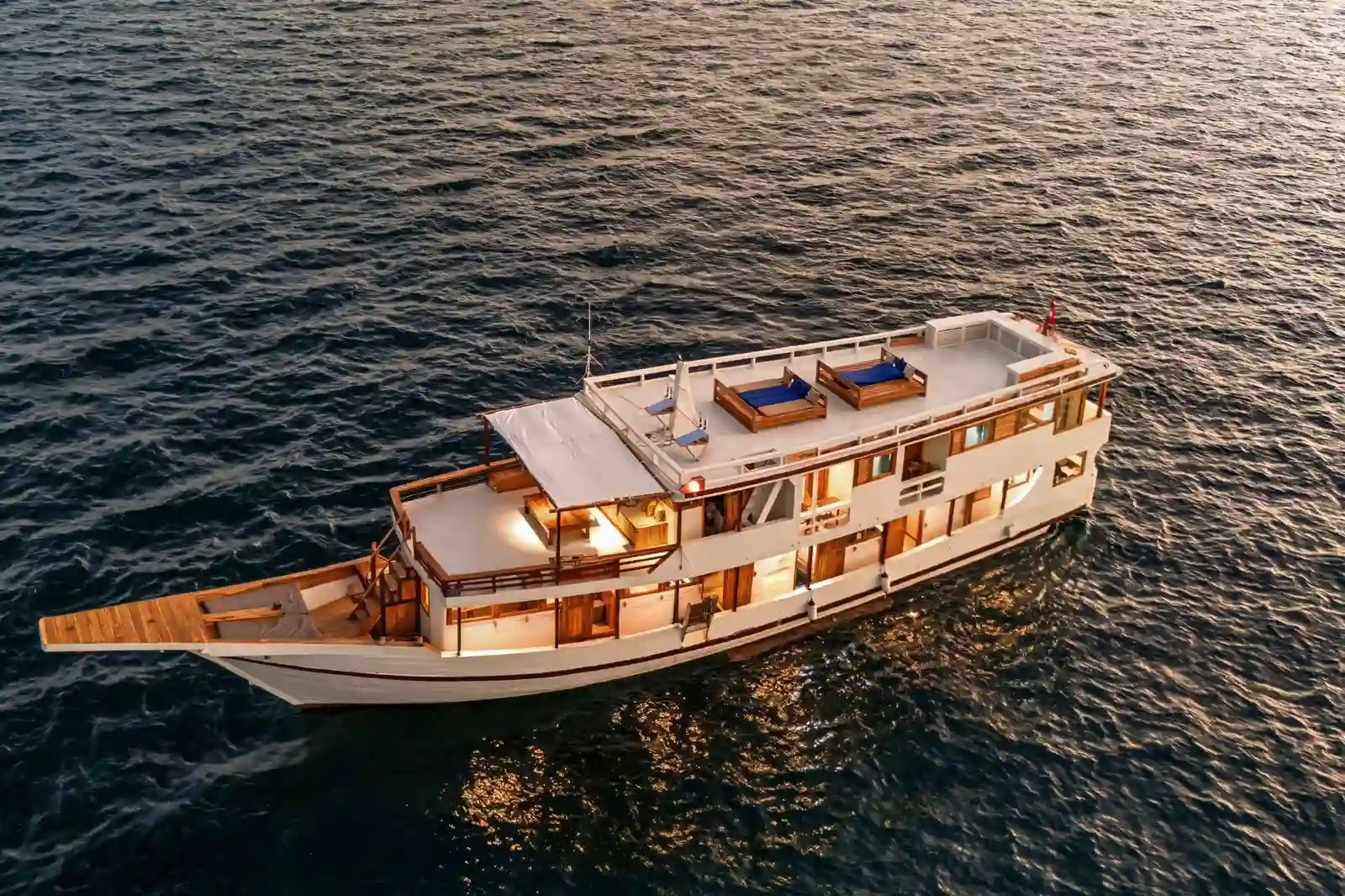
A dive-ready liveaboard phinisi for the Komodo trade is a specialist purchase: the dive deck, compressor room and permit stack matter as much as the hull, and the cabin plan decides whether the vessel can actually earn. This page covers what to specify, what the permits require and what the numbers look like. For the general Komodo market beyond dive operations, the Komodo market desk is the place to start; for what is on the water right now, see the boats currently listed around Komodo.
The Dive-Ops Specification
When we survey a “dive-ready” phinisi, this is the checklist that separates marketing from capability:
- Dive deck. Purpose-built tank racks (not lashed crates) for at least 2 tanks per guest, camera table with rinse tanks, gear lockers, and a stern or side entry with a proper ladder — reboarding twelve tired divers over a bulwark is not a plan.
- Compressor room. A ventilated, sound-insulated space with one high-capacity compressor plus a backup, intake plumbed away from exhausts, and service records. Nitrox membrane systems are now expected in the upper mid-market.
- Tenders. Two rigid dive tenders with reliable outboards; Komodo currents make the tender fleet a safety system, not a convenience.
- Safety stack. Oxygen kits, DAN-aligned first aid, recall system, and crew trained for drift-dive pickups in current.
Retrofitting all of this onto a non-dive phinisi typically costs USD 60K–150K — a number that belongs in your offer arithmetic when comparing candidates.
Permits: The Komodo Layer
Operating dive trips inside Komodo National Park adds a permit layer on top of standard charter licensing: park entry arrangements, dive-operation compliance, and moorings discipline that rangers enforce seasonally. Permits attach to the operating entity, so the acquisition structure — asset deal or share deal — decides whether they transfer or must be re-applied for. The general mechanics are the same as any working charter-boat acquisition; the park layer just raises the price of getting it wrong, because a vessel that cannot enter the park cannot earn its rate card.
Cabin Economics and RevPAC
Dive liveaboards sell berths, so think in revenue per available cabin (RevPAC). A typical 8-cabin Komodo dive vessel running USD 350–600 per person per night at 55–70% seasonal occupancy produces materially different economics from a 5-cabin luxury layout at USD 800–1,200 — more revenue, more crew, more wear. Neither is “right”: the mistake is buying a hull whose cabin plan fights your intended market. Decide budget-group, mid-market or premium first, then buy the layout that serves it. The full earnings model sits in our liveaboard ROI case file.
What Dive-Ready Vessels Cost
Genuine dive-ready phinisi around the Komodo trade currently ask USD 400K–900K in the working mid-market, with premium dive-liveaboard builds from USD 1.2M upward. Vessels advertised as dive-ready but missing the compressor room or tender fleet should be priced as conversions — deduct the retrofit. Our buyer-side acquisition roadmap prices every candidate works-adjusted, and dive-spec verification is written into the survey scope, not left to the listing photos.
Crew: The Dive Operation Inside the Boat Operation
A dive liveaboard runs two crews in one hull: the marine crew (captain, engineer, deckhands) and the dive team (cruise director, guides, tender drivers) — and purchase due diligence should read both rosters. Questions that matter: are the dive guides employed or freelance, and will they stay through an ownership change; who holds the guest-facing relationships that produce repeat bookings; are guide certifications current and documented; and does the vessel’s safety record live in writing or in someone’s memory that leaves with them? A Komodo dive vessel with a stable, certified dive team and a named cruise director carries measurable goodwill — and losing that team at handover quietly repeats the vessel’s first season, reviews and all. Retention terms for the dive team belong in the sale agreement with the same weight as the engine survey.
Owners planning a build-to-operate route can follow the Sulawesi commissioning diary; those buying yield may prefer fractional shares in operating liveaboards.
Frequently Asked Questions
What revenue can a Komodo dive liveaboard realistically produce?
A well-run 8-cabin mid-market dive vessel commonly grosses USD 400K–700K a season on 55–70% occupancy, with net operating margins of 20–35% after crew, fuel, park costs and agents. Premium 5–6 cabin operations gross less but hold margin through rate. Model on verified operator numbers, never brochure occupancy.
What occupancy should I assume when buying a dive liveaboard for Komodo?
Underwrite at 50–60% annualized even if the seller shows 75% peak-season figures. Komodo demand is deeply seasonal — July–September runs near-full, the monsoon shoulder does not — and one cyclone-season refit month must come out of the calendar every year.
Does a dive compressor and nitrox system really matter at purchase?
Yes — it is the difference between a dive operation and a boat that carries divers. A proper compressor room with backup and nitrox capability costs USD 25K–60K to retrofit and weeks of yard time; vessels that already have it, documented and serviced, deserve their premium.
Do Komodo National Park permits transfer when I buy the boat?
Only if you acquire the operating entity they attach to (share deal) — and the park authority’s current rules still apply. In an asset deal you re-apply under your own entity, which takes time you should build into the handover schedule before committing to guests.
Can a liveaboard bought for Komodo also work Raja Ampat seasons?
Many owners alternate: Komodo in the July–September prime, Raja Ampat in the northern winter window. The vessel needs the range, tankage and permits for both — and the crew logistics roughly double. Buy for the dual-season plan explicitly; retrofitting range onto a coastal spec is the expensive path.
Buying for the Komodo dive trade? WhatsApp a buyer’s agent at +62 811-3941-4563 or email bd@juaraholding.com.