
Phinisi Schooner vs. Catamaran: Which Is the Better Purchase?

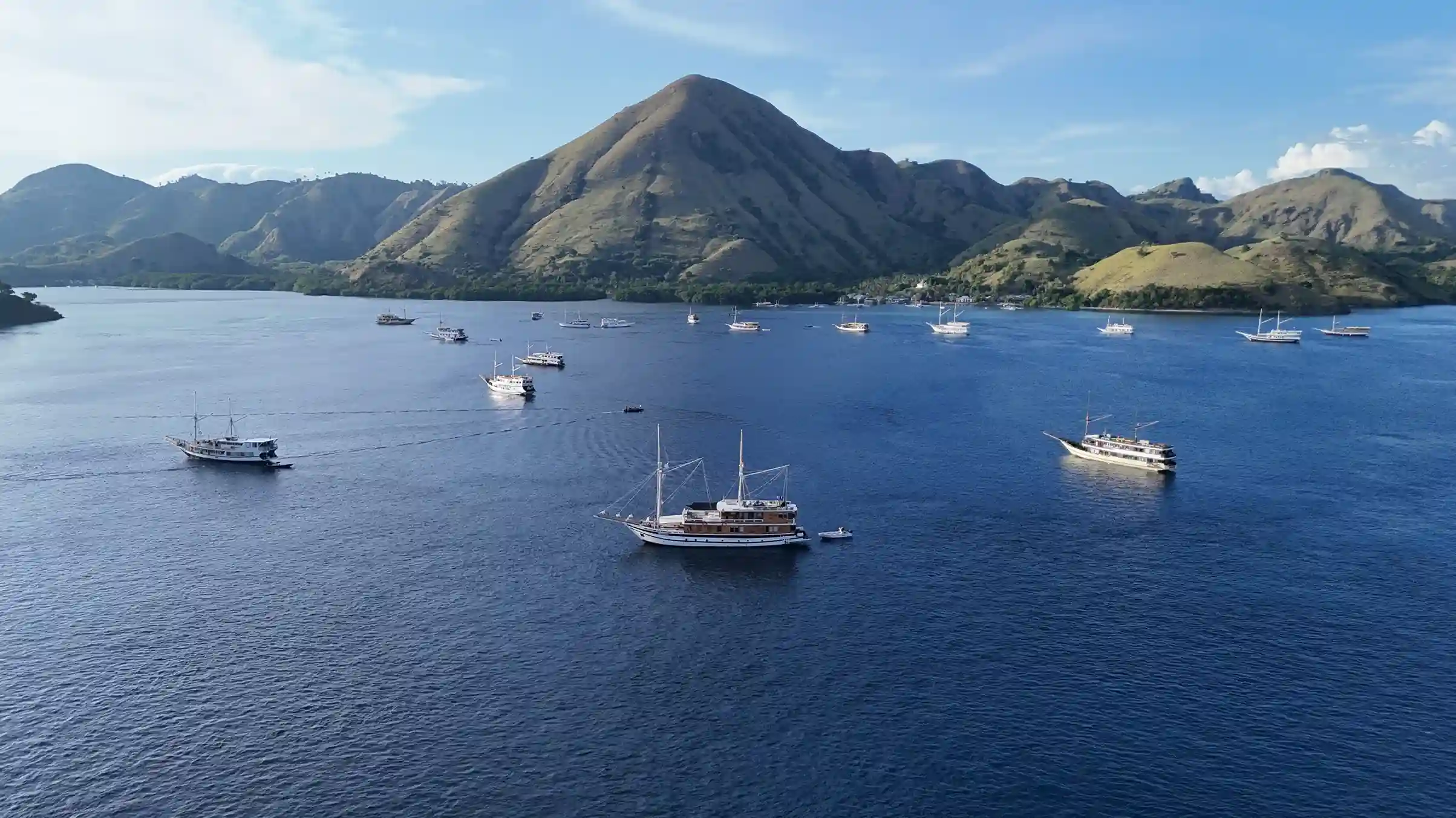
- Unrivaled Space: A phinisi’s single-hull design provides cavernous interiors and vast, multi-level decks unmatched by a catamaran of similar length.
- Cultural Cachet: As a UNESCO-recognized art form, the phinisi itself is a primary attraction for high-end charter guests seeking an authentic experience.
- Higher Charter ROI: The unique appeal of phinisis in Indonesia allows them to command premium charter rates, often yielding a stronger return on investment.
The air hangs heavy with the scent of clove and warm, damp earth. Below deck, the low, reassuring thrum of a generator provides a steady heartbeat. You’re anchored in a turquoise bay off Padar Island, and the silhouette of a lone Komodo dragon traces the ridge of the savannah-like hills against a violet dusk. The decision to be here, to own this moment, comes down to the vessel beneath your feet. In the exclusive theater of the Indonesian archipelago, two primary vessel types dominate the conversation for prospective owners: the modern, performance-oriented catamaran and the soulful, majestic Indonesian phinisi. While both offer a passport to paradise, the choice between them is not merely one of aesthetics or naval architecture; it is a fundamental decision about the very nature of the experience you wish to create, own, and offer to the world. For those looking to enter the ultra-luxe charter market or build a private legacy in these waters, understanding the nuanced differences is paramount before you buy phinisi yacht.
The Soul of the Archipelago: Understanding the Phinisi’s Legacy
To view a phinisi as simply a “wooden boat” is to miss the point entirely. It is a floating embodiment of a nation’s maritime soul, a direct link to centuries of seafaring prowess. The art of phinisi-making, practiced for generations by the Konjo people of South Sulawesi, is so culturally significant that it was inscribed on UNESCO’s list of the Intangible Cultural Heritage of Humanity in 2017. This is not a marketing gimmick; it is a profound distinction that resonates deeply with the discerning travelers who charter these vessels. Construction itself is a ritual. Master builders in places like Bira and Tanah Beru work without blueprints, relying on ancestral knowledge to shape the ironwood (ulin) keel and teak superstructure. A 40-meter phinisi can require over 200 cubic meters of timber and take anywhere from 18 to 24 months to complete, a testament to the intensive craftsmanship involved. The result is a vessel of immense character and strength. The two-masted gaff-rigged design, with its seven characteristic sails, is an icon of the region. This heritage is the phinisi’s single greatest asset. When a guest steps aboard, they are not just boarding a yacht; they are engaging with a piece of living history. This narrative is something a mass-produced fiberglass catamaran, no matter how luxurious, can never replicate. It is the core differentiator in the hyper-competitive luxury charter market of Indonesia.
The Modern Contender: The Catamaran’s Case for Efficiency
One must give the modern catamaran its due. From a purely technical standpoint, it presents a compelling argument. Designed with performance and efficiency in mind, a sailing catamaran is engineered to be fast and light. Where a traditional phinisi might cruise comfortably under motor at 8-10 knots, a comparable 60-foot catamaran can often sustain speeds of 12-15 knots, potentially covering more ground on a week-long charter. This speed is coupled with notable fuel efficiency; twin 300hp engines on a catamaran will consume significantly less fuel than the single 500-700hp engine of a 300-ton phinisi. Their GRP (Glass Reinforced Plastic) or aluminum construction, born of modern manufacturing, allows for faster build times and predictable maintenance schedules. Another frequently cited advantage is the shallow draft. A catamaran might draw just 1.5 meters, allowing it to nose into shallow bays and anchor closer to certain beaches. While this is a valid point, its practical importance in Indonesia, an archipelago of over 17,500 islands with countless deep, protected anchorages, is perhaps overstated. For an owner focused purely on metrics—speed, fuel burn, production time—the catamaran appears to be the logical choice. It is a highly capable and comfortable platform for exploring coastal waters anywhere in the world. Its weakness, specifically in the Indonesian market, is that it is a global product in a region that rewards hyper-local authenticity.
Space, Volume, and the Onboard Experience
Here, the comparison shifts dramatically in the phinisi’s favor. The fundamental difference between a monohull and a multihull dictates the entire onboard living experience. A 45-meter phinisi offers a single, cavernous hull, providing a naval architect with a vast, uninterrupted canvas. This translates into opulent, full-beam master suites, expansive indoor saloons, professional-grade galleys, and crew quarters that are genuinely comfortable—a critical factor for crew retention and service quality. A 60-foot (18-meter) catamaran, while very wide, splits its accommodation between two narrow hulls. Cabins, while private, are inherently constrained in width. The main social area is the central bridgedeck saloon, which can be spacious, but the vessel lacks the vertical volume and separation of spaces found on a phinisi. As I once heard a seasoned yacht designer remark, “On a phinisi, you are designing a boutique hotel that floats. On a catamaran, you are cleverly arranging furniture in a fixed apartment layout.” The disparity extends to the exterior. A phinisi like the magnificent Prana by Atzaró offers over 900 square meters of usable space across four decks. This creates numerous, distinct social zones: a foredeck for morning yoga, a main deck for al fresco dining, an upper deck lounge for sunset cocktails, and a top sun deck for private sunbathing. This spatial luxury allows 12 guests to feel a sense of privacy and discovery, a core tenet of high-end hospitality.
The Investment Calculus: Charter Potential and ROI
For anyone investigating a “phinisi schooner vs catamaran purchase” as a commercial venture, this is the decisive chapter. The Indonesian luxury tourism market is a unique ecosystem. According to Indonesia’s Ministry of Tourism and Creative Economy, the government is heavily invested in promoting marine tourism and the nation’s cultural heritage. The phinisi is the poster child for this initiative. High-net-worth individuals traveling to Raja Ampat or the Komodo National Park are not merely seeking sun and sea; they are purchasing an experience. The vessel itself is a primary component of that experience. Consequently, top-tier phinisis command staggering charter rates, often ranging from $80,000 to over $150,000 per week. A luxury catamaran in the 60-70 foot range might top out at $40,000-$60,000 per week in the same region. The phinisi occupies a higher, more protected market segment. While the initial investment and annual maintenance for a wooden vessel can be higher—a yearly dry-docking and hull service is standard practice—the premium charter income more than compensates for it. A well-managed phinisi with a strong charter calendar can see a gross annual revenue exceeding 10-15% of its capital value. The key is to partner with experts who understand this specific market, from initial build supervision to ongoing charter management, a service central to the Buy Phinisi Yacht mission.
Navigational Realities: Cruising Indonesian Waters
The operational environment of Indonesia, particularly the seas of the Coral Triangle, presents unique conditions. The region is known for its relatively calm seas and often light, variable winds, interspersed with occasional squalls. This means that, realistically, both phinisis and catamarans will spend a significant percentage of their time—perhaps as much as 70%—under motor. In these conditions, the phinisi’s sheer mass and deep draft become a significant advantage. Its heavy displacement, often exceeding 300 tons, provides a slow, comfortable, and predictable motion through the water. It dampens the roll, creating a stable platform that minimizes seasickness and enhances guest comfort. A lighter catamaran, while stable at anchor, can have a quicker, sometimes jerky motion when underway in a choppy cross-sea. Furthermore, operating a phinisi necessitates a larger, local Indonesian crew. A 45-meter phinisi might carry a crew of 16, including a cruise director, dive master, and chef, compared to a crew of 4 or 5 on a large catamaran. This is not a liability; it is an asset. It provides an exceptional level of service for guests and directly supports the local economy, adding another layer of authenticity to the experience. These crews possess generations of knowledge about the local waters, weather patterns, and hidden anchorages, a resource no electronic chart can replace.
Quick FAQ: Phinisi Schooner vs Catamaran Purchase
Is a phinisi harder to maintain than a catamaran?
A traditional wooden phinisi requires specialized care, particularly for its ironwood hull and teak decks. However, modern phinisis are equipped with state-of-the-art engines, generators, and navigation systems, which are maintained to the same standards as any superyacht. With a professional management program, maintenance is a scheduled, predictable expense, and a well-built phinisi is an asset designed to last for decades.
Which has better resale value?
The market dynamics are different. The global market for used catamarans is large and liquid, with value largely determined by brand, age, and condition, much like a production car. A bespoke phinisi is more like a piece of real estate or functional art. A high-quality vessel with a strong charter record and a reputable builder, such as those you can explore with a specialist broker, can hold its value exceptionally well and is often sold to a discerning buyer looking for that specific, unique asset.
Can a phinisi sail as efficiently as a catamaran?
They offer different sailing pleasures. A catamaran is a more performance-oriented machine; it sails faster, particularly upwind. A phinisi offers a powerful, majestic, and incredibly stable experience under sail, especially with the wind abeam. Given the light-wind conditions prevalent in many Indonesian cruising grounds like Raja Ampat, pure sailing performance is often a secondary consideration to comfort under motor and at anchor.
What is the guest capacity comparison?
Due to their immense volume, phinisis can comfortably accommodate more guests in spacious, en-suite cabins. Many luxury phinisis are licensed for 12 to 18 guests, making them ideal for large family groups or corporate charters. A large cruising catamaran is typically configured for 8 to 10 guests. This higher capacity directly impacts the vessel’s maximum revenue potential per charter week.
The choice is clear. The catamaran is a capable, efficient vessel—a logical choice for cruising many parts of the globe. But for Indonesia, a nation defined by its maritime heritage, the phinisi is not just a better boat; it is the only boat that fully embraces and elevates the destination. It is an investment in a legacy, a platform for truly profound experiences, and the more astute financial decision for the specific demands of this ultra-luxe market. The conversation about a phinisi schooner vs catamaran purchase ultimately ends where the journey begins: with a desire for authenticity. When you are ready to explore the tangible benefits and deep rewards of owning a piece of this legacy, the journey to buy phinisi yacht begins with a conversation. Let us show you what is possible.