
Discovering Indonesia’s Best Routes for Your Custom Phinisi Schooner

- Komodo National Park (April – October): Ideal for its iconic dragons, dramatic landscapes, and encounters with manta rays in the dry season.
- Raja Ampat (October – April): Offers exceptional marine biodiversity at the heart of the Coral Triangle, best visited during the calm seas of the wet season.
- The Banda Islands (Shoulder Seasons): A historical and deep-diving destination for pelagic life, best explored in March-May and September-November.
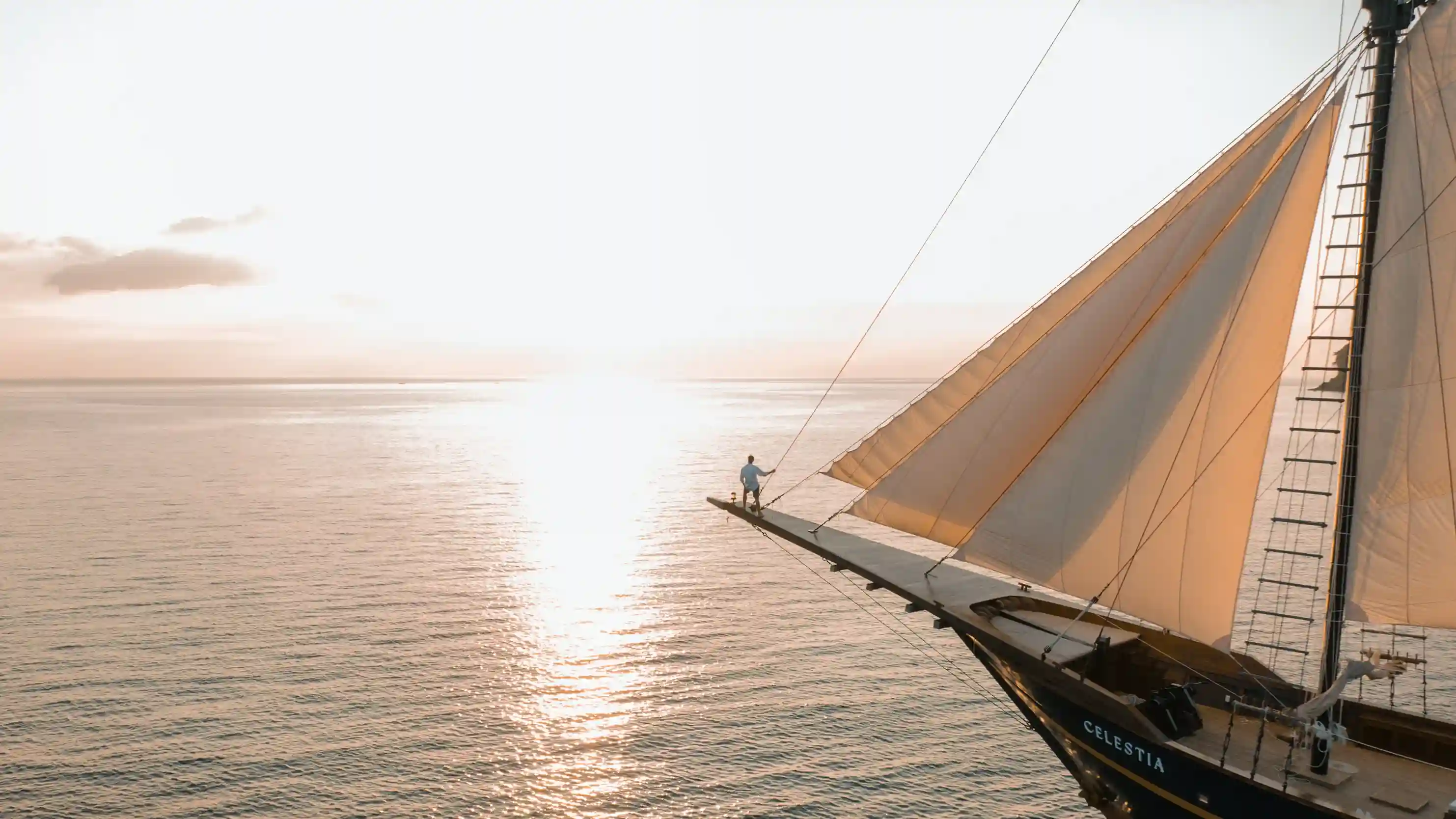
The warm teak deck is solid under your bare feet. Above, the twin masts of your phinisi cut a sharp, traditional silhouette against a sky ablaze with the dawn. The air, thick with the scent of salt and brewing coffee, carries the distant call of a tropical bird from the jungle-clad island to port. You are gliding over water so clear it feels like flying, the deep blue shifting to impossible turquoise over the reef below. This is not a dream; this is the reality of navigating the world’s largest archipelago aboard your own vessel. The decision to buy a phinisi yacht is the first step, but the true journey begins when you chart a course. As an editor who has spent years covering the far corners of the globe, I can tell you that no place offers more profound discovery than the waterways of Indonesia, and no vessel is better suited to its exploration.
The Komodo Archipelago: A Realm of Dragons and Pink Sands
For many, the first chapter of their phinisi ownership story is written in the waters of the Komodo National Park. It is, without question, the quintessential Indonesian itinerary. The optimal sailing window here is from April to October, during the dry season when the seas are calm and the skies are a brilliant, uninterrupted blue. The savannah-like hills turn a burnished gold, creating a dramatic contrast with the cerulean water. This route is a masterclass in diversity. One day you are trekking on Rinca Island, standing a respectful distance from a 3-meter Komodo dragon, a living relic of a prehistoric age. According to UNESCO, which designated the park a World Heritage Site in 1991, these are the last remaining habitats for the world’s largest lizard. The next day, you are submerged at Manta Point, watching a dozen giant manta rays, with wingspans reaching up to 7 meters, glide effortlessly through the plankton-rich currents. The diving here is not for the faint of heart; sites like Batu Bolong are legendary for their swirling currents and staggering density of marine life—over 1,000 species of fish call this park home. My friend and veteran phinisi captain, Iwan, once told me, “Komodo teaches you respect for the ocean. But it rewards you with sights you will see nowhere else.” Beyond the wildlife, the topography itself is the main character. The iconic stop is the summit of Padar Island at sunrise, where you can photograph the tri-colored bays—one with white sand, one with black volcanic sand, and one with the famous pink sand, a result of crushed red organ-pipe coral. For a first-time owner, the relative proximity of the islands and the established infrastructure make Komodo an ideal, and deeply rewarding, shakedown cruise.
Raja Ampat: The Last Paradise on Earth
When the winds shift in October, the savvy phinisi owner turns their bow eastward, towards the region known as The Four Kings: Raja Ampat. Located off the northwest tip of New Guinea, this is the global epicenter of marine biodiversity. If Komodo is a spectacular drama, Raja Ampat is an epic of staggering scale and complexity. The best time to visit is from October through April, when the seas are glassy and the weather is favorable. The sheer numbers here are difficult to comprehend: the region contains over 1,600 species of reef fish and 550 species of coral, which represents more than 75% of all known coral species on the planet. For a diver, this is the holy grail. But you don’t need a tank to appreciate it. Snorkeling in a place like Melissa’s Garden feels like swimming through a perfectly manicured, submerged botanical park. The defining visual of Raja Ampat is the labyrinth of karst islets in Wayag, sharp limestone formations cloaked in emerald jungle, rising vertically from the turquoise water. A custom phinisi is the only way to properly explore this 40,000-square-kilometer area. You can anchor in a secluded bay, miles from any other vessel, and spend the day exploring hidden lagoons and secret beaches by kayak. On a trip through Misool in the south, I recall visiting a series of caves with 5,000-year-old rock paintings, accessible only by a small tender. It’s this level of intimate access that defines luxury in the modern age. Exploring the best of what Raja Ampat has to offer is one of the primary reasons clients begin to investigate how to buy a phinisi yacht; they realize that a standard charter simply cannot do it justice.
The Spice Islands (Banda & Alor): A Voyage Through History
For the owner with a taste for history and a spirit for true bluewater sailing, the routes through the Banda and Alor archipelagos offer an exceptional experience. These are the fabled Spice Islands, the original source of nutmeg and mace, commodities that were once worth more than gold and drove the great European powers to war. The ideal time to make this journey is during the inter-monsoon periods of March-May and September-November when the vast Banda Sea is at its calmest. Sailing into the harbor of Banda Neira is like sailing back in time. You anchor in the shadow of Gunung Api, a perfectly conical volcano, surrounded by 17th-century Dutch forts. You can walk through the original nutmeg groves and almost smell the history on the trade winds. As noted by historians covering the global spice trade, this tiny cluster of islands shaped the world’s economy for centuries. But this route is more than a history lesson. The Banda Sea is a major migration route for cetaceans, and the diving is legendary for its pelagic encounters. Off the island of Ai, schools of scalloped hammerhead sharks often congregate in the deep, blue water. Further west, the Alor archipelago offers some of the most vibrant and bizarre critter diving in the world, a macro photographer’s dream. This is a passage for a well-equipped, long-range phinisi. The distances are greater, the logistics more demanding. A crossing of the Banda Sea can take several days, requiring a vessel with significant fuel capacity, advanced navigation equipment, and comfortable living quarters for extended periods at sea. This is where the “custom” in “custom phinisi” becomes paramount.
Cenderawasih Bay: Swimming with Gentle Giants
There are popular routes, and then there are routes for the genuine explorer. Cenderawasih Bay, in northern Papua, falls firmly into the latter category. For those who prize solitude and singular experiences over everything else, this is one of Indonesia’s best routes for a custom phinisi schooner. The bay is Indonesia’s largest marine national park, a massive 14,535 square kilometer expanse of protected water. Its primary allure is a unique and reliable opportunity to swim with whale sharks, the largest fish in the sea. Unlike other places where encounters are seasonal and fleeting, a resident population of whale sharks here has learned to congregate around the floating fishing platforms, or bagans. The fishermen have a symbiotic relationship with the sharks, viewing them as good luck and sharing their baitfish. The result is an ethical, non-intrusive encounter where you can spend hours in the water with these gentle giants, which can grow up to 18 meters long. Beyond the whale sharks, Cenderawasih offers pristine, unexplored reefs and a remarkable collection of World War II wrecks, including several well-preserved aircraft. The bay was a sheltered harbor during the war, and its calm waters have kept these historical artifacts in exceptional condition. This is a journey that requires self-sufficiency. There are no five-star resorts or bustling port towns here. Your phinisi is your entire world—your transport, your hotel, your dive center, your fine-dining restaurant. It’s a testament to the freedom that comes with owning a vessel built for true adventure, far from the well-trodden paths.
Designing Your Phinisi for the Route of Your Dreams
The beauty of commissioning your own phinisi is the ability to tailor it to your specific vision of exploration. The ideal vessel for day-sailing around Komodo is different from one designed to cross the Banda Sea. When you begin the process with a reputable builder, the first question shouldn’t be about the number of cabins, but about where you want to go. For a future focused on Raja Ampat and Komodo, the design will emphasize the dive operations. This means a spacious, well-designed dive deck, twin high-capacity compressors for rapid tank fills, a dedicated camera room with multiple charging stations, and powerful, stable tenders to handle choppy seas. You might opt for a slightly shallower draft to access hidden coves. For an owner dreaming of the Spice Islands and Cenderawasih Bay, the focus shifts to range and autonomy. This translates to larger fuel and water tanks, extensive freezer and dry storage capacity for provisions, a state-of-the-art water maker, and perhaps a more robust satellite communication system. The interior spaces might be designed for greater comfort during long passages at sea. “We always tell our clients to map their dreams first, then we draw the boat,” a leading phinisi designer in South Sulawesi explained to me. “The routes dictate the hull, the systems, the entire philosophy of the vessel.” This bespoke approach ensures that your phinisi is not just a beautiful craft, but the perfect key to unlock the specific Indonesian routes you wish to travel. You can explore various build options to see how these philosophies translate into tangible designs.
Quick FAQ: Navigating Your Phinisi Journey
What is the best time of year to sail Indonesia? Indonesia is a year-round destination, split between two main seasons. From April to October, the dry season makes Komodo, Flores, and the Lesser Sunda Islands ideal. From October to April, the winds shift, creating calm seas perfect for exploring Raja Ampat, the Spice Islands, and West Papua.
How long does a typical Phinisi expedition last? While charters are often 7-10 days, owners can plan much longer voyages. A full Komodo loop might take two weeks, while a comprehensive Raja Ampat exploration could be a month or more. A Banda Sea crossing requires at least 10-12 days to do it justice, accounting for weather and exploration stops.
Do I need to be a diver to enjoy these routes? Absolutely not. While the diving is top-tier, these routes offer incredible experiences for everyone. Snorkeling in many areas is just as rewarding. Other activities include kayaking through mangrove forests, paddle-boarding in calm lagoons, trekking to scenic viewpoints, visiting remote villages, and bird watching. A custom phinisi is a platform for all forms of marine and island exploration.
What makes a phinisi ideal for navigating Indonesia? The traditional phinisi design, with its ironwood hull and relatively shallow draft, was perfected over centuries for navigating the archipelago’s tricky, coral-rich waters. According to the official portal, indonesia.travel, this maritime heritage is a key part of the nation’s identity. Modern builds combine this sea-proven heritage with luxury amenities, powerful engines, and advanced safety features, creating the perfect vessel for remote, comfortable, and authentic exploration.
The Indonesian archipelago is not a single destination, but a universe of 17,000 islands, each with its own story, ecosystem, and magic. Charting a course through these waters on your own custom phinisi is one of the last great adventures available to the modern traveler. It is an investment not just in a vessel, but in a lifetime of discovery, shared with family and friends. Your personal odyssey through these islands begins not with a map, but with a conversation about what is possible. Explore the potential and begin designing your legacy when you inquire about your own phinisi yacht.