
A Guide to Sailing Your Phinisi in Raja Ampat in December

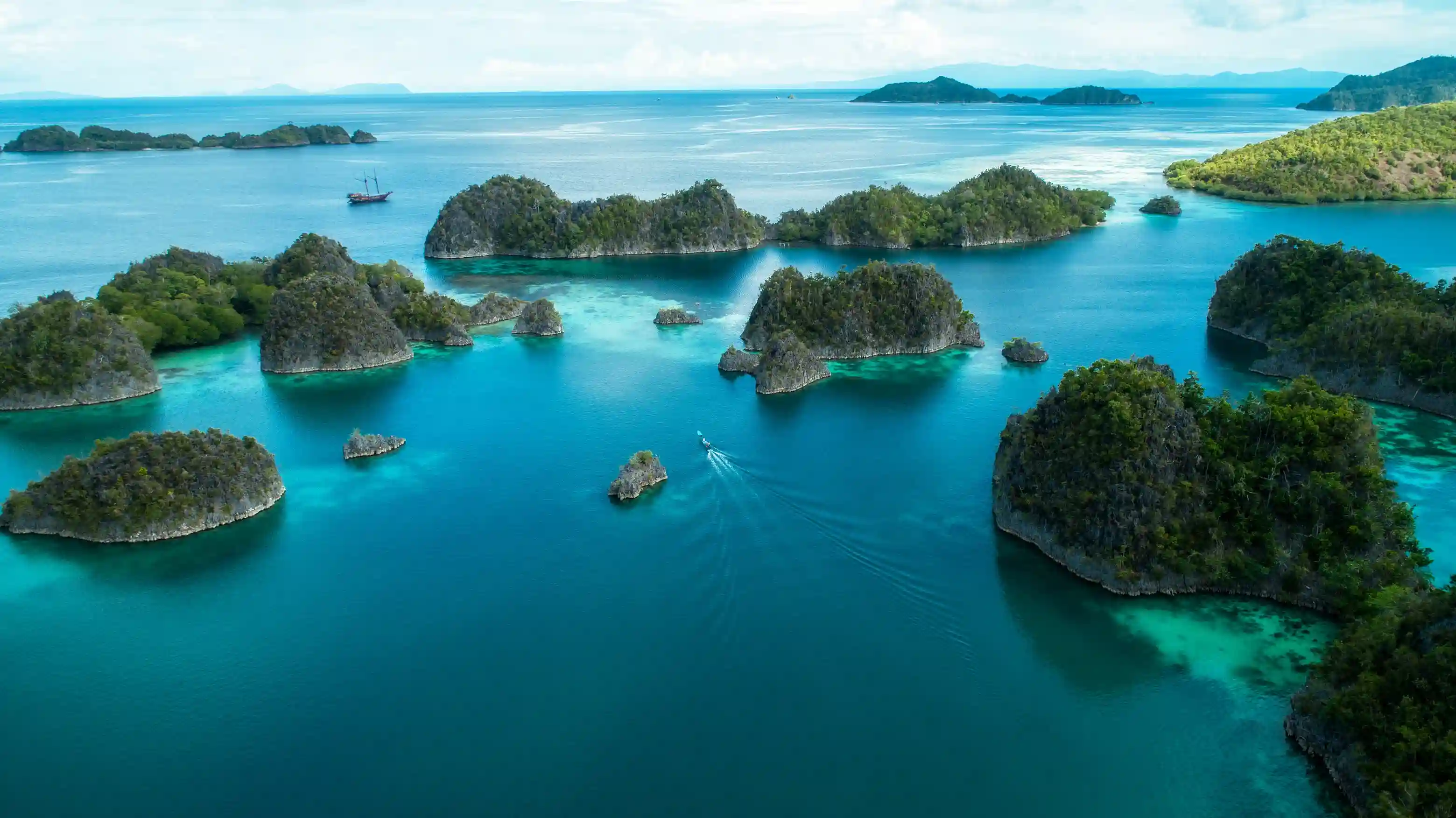
- Optimal Weather: December marks the start of the northwest monsoon, resulting in minimal rain, calm surfaces, and average water temperatures of 29°C.
- Peak Marine Activity: Underwater visibility can exceed 30 meters, and it is a prime time for spotting oceanic manta rays at key cleaning stations.
- Exclusive Atmosphere: While it is high season, the vastness of the 4.6 million-hectare marine park ensures a feeling of private discovery, especially aboard your own vessel.
The air is thick with the scent of salt and damp earth, a fragrance unique to the equator. From the bow of the Amandira, the morning sun fractures across the Dampier Strait, turning the placid water into a sheet of hammered gold. It is early December in Raja Ampat, and the world feels brand new. The twin masts of our phinisi cut a sharp, traditional silhouette against a backdrop of limestone karsts that erupt from the sea like ancient teeth. Below deck, the crew is already preparing the dive tenders. This is not just a vacation; it is an immersion. Sailing a phinisi in Raja Ampat in December is to experience this marine sanctuary at its most serene and vibrant, a time when the weather, the water, and the wildlife conspire to create a near-perfect state of being.
Why December is the Apex of the Raja Ampat Sailing Season
Seasoned captains who have spent decades navigating the Coral Triangle speak of December with a certain reverence. It represents a meteorological sweet spot, a brief and glorious window that defines the peak sailing season. This is the period of transition, as the last vestiges of the southeast monsoon give way to the gentler, drier northwest monsoon. The result is a consistent pattern of calm, glassy seas, particularly in the sheltered northern and central regions like the Dampier Strait. For a vessel under sail, this means smooth passages and comfortable anchorages. Wind is typically light, averaging 5-10 knots, which is ideal for leisurely cruising and allows for easy launching of tenders for diving and exploration. The notorious Papuan squalls are far less frequent, replaced by long days of brilliant sunshine with only the occasional, fast-moving evening shower that leaves the air feeling cleansed.
The conditions below the surface are equally pristine. Water temperatures hover between a balmy 28°C and 30°C, making for comfortable, long dives without the need for thick wetsuits. More importantly, the water clarity is at its zenith. The reduced rainfall and runoff mean that visibility often pushes past 30 meters, transforming dive sites into vast, blue cathedrals. I recall a conversation with renowned underwater photographer Michael Aw, who described December as “the month of liquid light,” a time when the sun’s rays penetrate deep into the water column, illuminating the staggering coral diversity. This clarity is crucial for appreciating the scale of Raja Ampat’s reefs, which, according to Indonesia’s official tourism board, are home to over 540 types of coral—an astonishing 75% of all known species on Earth. For anyone considering when to plan their journey, especially those looking to buy a phinisi yacht for personal exploration, timing it for December ensures you witness the archipelago in its most flattering and accessible state.
Charting Your Course: A Sample 10-Day Itinerary
A phinisi grants you the ultimate freedom: a floating private villa with an ever-changing backyard. While every itinerary can be tailored, a 10-day voyage in December allows for a comprehensive exploration of Raja Ampat’s iconic northern and central regions. Your journey begins in Sorong, the gateway port, where you board your vessel and set sail as the sun dips low. The first destination is the Dampier Strait, a mere 30-nautical-mile journey. Spend the first two days exploring world-famous dive sites like Cape Kri, which holds the world record for the most fish species (374) identified on a single dive. Your crew will find a quiet anchorage near Kri or Mansuar islands for the night. Days three and four are dedicated to the journey north to the Wayag Islands, a 70-nautical-mile passage made pleasant by December’s calm seas. This is the postcard image of Raja Ampat. Your crew will navigate the intricate labyrinth of conical karst islets to a secure mooring, allowing you to kayak through hidden lagoons and make the challenging but rewarding 30-minute trek to the summit of Mount Pindito for that iconic, panoramic photograph.
Mid-voyage, you’ll head south to Aljui Bay on Waigeo’s western coast. This area offers a change of pace, home to the Cendana Pearl Farm where you can witness the cultivation of exquisite South Sea pearls. The diving here shifts from wide-angle reefs to muck diving, a paradise for macro photographers seeking rare critters like pygmy seahorses and ghost pipefish. From here, a longer overnight sail of over 100 nautical miles can take you to the southern wonderland of Misool, a journey best undertaken during the placid conditions of December. However, a more relaxed 10-day trip often focuses on the central and northern areas. Therefore, days seven and eight would be better spent exploring the Fam Islands. You’ll climb to another spectacular viewpoint overlooking the Penemu islands before diving Melissa’s Garden, a sprawling coral plateau teeming with life. The final days are for the return journey, perhaps stopping at Batanta Island for a jungle trek to a secluded waterfall and a final opportunity to spot the elusive Wilson’s Bird of Paradise. This itinerary balances iconic sights with lesser-known spots, showcasing the incredible versatility that a private phinisi charter provides.
The Underwater Spectacle: What to Expect Diving in December
For divers, a trip to Raja Ampat is a pilgrimage. Doing so in December is akin to arriving during high mass. The combination of calm seas and exceptional visibility creates an exceptional underwater theater. This is the prime season for encountering oceanic manta rays (Manta birostris), which congregate in large numbers at cleaning stations like Manta Sandy and Manta Ridge. On a recent December trip, our group spent an entire 70-minute dive watching a ballet of more than a dozen giant mantas, some with wingspans exceeding 5 meters, gliding gracefully over the reef to be cleaned by wrasses. The experience is profound and deeply humbling. The currents, while always a factor in the nutrient-rich Dampier Strait, are often more predictable and manageable this time of year, allowing for exhilarating drift dives along sites like “The Passage,” a saltwater river flowing between Gam and Waigeo islands.
Beyond the megafauna, the sheer biomass is what defines Raja Ampat. The reefs are electric with activity. Schools of fusiliers, numbering in the thousands, flow over the coral like rivers of silver and blue. Wobbegong sharks, masters of camouflage, lie in wait on coral bommies, while pods of dolphins frequently escort the phinisi between islands. The coral itself, protected by the region’s status as a UNESCO World Heritage Site tentative list candidate, is in strikingly good health. The colors are explosive, from deep purple sea fans to fluorescent orange soft corals. For photographers, the conditions are a dream. The clear water allows for remarkable wide-angle shots that capture the scale of the reefs, while the abundance of macro life, from the tiniest Denise’s pygmy seahorse to the flamboyant cuttlefish, provides endless subjects for detailed portraits. Sailing a phinisi in Raja Ampat in December isn’t just about the diving; it’s about total immersion in the planet’s most vibrant marine ecosystem at the very moment it is showing off.
Onboard Life: Curating the Ultimate Phinisi Experience
The magic of a phinisi journey extends far beyond the destinations. It is about the vessel itself—a handcrafted wooden masterpiece that is both your mode of transport and your sanctuary. Life on board is a seamless blend of adventure and serenity. A typical day begins with the gentle rocking of the boat at anchor and the aroma of freshly brewed Papuan coffee. After a light breakfast, the first dive or excursion of the day begins. When you return, a hot towel and fresh juice are waiting. The crew, often numbering more than the guests, are the unsung heroes of the experience. A great captain, like the legendary Pak Agus from the Silolona, possesses an encyclopedic knowledge of every reef and current, ensuring not only safety but access to secret coves and deserted beaches far from any other vessel. The divemasters are marine biologists in their own right, able to spot a camouflaged octopus from ten meters away. The chef, meanwhile, works miracles in the galley, transforming locally sourced fish, fruits, and vegetables into multi-course meals that rival those of any fine-dining restaurant.
The afternoons are for leisure: napping in a shaded daybed, reading a novel on the expansive main deck, or receiving a traditional massage as the scenery glides by. As evening approaches, the ritual of the sunset cocktail begins, often served on a sandbar set up by the crew with tiki torches and cushions. After a gourmet dinner under a canopy of stars so bright they seem to touch the mast, the day ends with the quiet hum of the generator and the gentle lapping of water against the hull. This level of personalized service and privacy is the hallmark of a luxury phinisi experience. For those who fall in love with this way of life, the natural next step is ownership. When you buy a phinisi yacht, you gain the power to dictate every detail, from the menu to the music to the exact coordinates of your private paradise. It is the ultimate expression of freedom on the water.
Logistics and Considerations for a December Voyage
Executing a flawless phinisi journey in Raja Ampat, especially during the peak month of December, requires foresight and planning. This is not a last-minute destination. The world’s most reputable phinisi charters, such as those in the Buy Phinisi network, are often booked 12 to 18 months in advance for the holiday season. Securing your preferred vessel and dates should be your first priority. Next are the permits. All visitors must obtain a Raja Ampat Marine Park entry permit, known locally as a PIN. The cost for international visitors is IDR 1,000,000 (approximately $65 USD), and the tag is valid for a full year. Your charter operator or yacht agent can typically arrange this for you in advance, ensuring a smooth arrival. The main logistical hub is Sorong (SOQ), with daily flights from major Indonesian cities like Jakarta (CGK) and Makassar (UPG).
Once on board, it is crucial to manage expectations regarding connectivity. This is a journey into one of the world’s last true wildernesses. While some vessels are equipped with satellite phones and rudimentary internet, it is often slow and expensive. Consider the voyage a rare opportunity for a digital detox. Packing should be strategic. In addition to swimwear and light clothing, essentials include a high-SPF, reef-safe sunscreen, polarized sunglasses, a wide-brimmed hat, and any personal medications. For divers, while gear is available for rent, bringing your own mask, computer, and regulator is always recommended for comfort and safety. Given the festive period, many guests choose to pack a few smarter outfits for Christmas Eve or New Year’s Eve dinners on board. The most important thing to bring, however, is a sense of flexibility. Weather can still be unpredictable, and the best captains will adjust the itinerary to ensure the safest and most spectacular experience, a key advantage of having a private Buy Phinisi yacht at your command.
Quick FAQ for Sailing Raja Ampat in December
Is December too crowded in Raja Ampat?
While December is considered high season, the term “crowded” is relative in a region covering over 40,000 square kilometers. The area is so vast that even with more boats present, a skilled captain can easily navigate to secluded anchorages and private dive sites. You will likely see other liveaboards in popular spots like Wayag, but true solitude is always just a short sail away.
What is the weather *really* like?
Expect consistent daytime temperatures around 31°C (88°F) with high humidity, cooling slightly in the evenings. The defining characteristic is the lack of wind and rain. The seas are generally calm to flat, making for exceptionally smooth sailing. You might experience a brief, intense tropical shower in the late afternoon, but these typically last less than an hour and are quite refreshing.
Can we celebrate Christmas or New Year’s on the phinisi?
Absolutely. Celebrating the holidays aboard a phinisi is a core reason many choose to travel in late December. Crews excel at creating a festive atmosphere. They might decorate the saloon with local crafts, prepare a magnificent celebratory feast featuring a whole roasted fish or suckling pig, and even organize a beach bonfire party for New Year’s Eve. It is a unique and memorable way to mark the occasion.
What about marine life encounters besides manta rays?
December is a fantastic month for all marine life. Besides mantas, you have a high chance of encountering multiple species of reef sharks (blacktip, whitetip, and the elusive wobbegong), large schools of barracuda and jackfish, and majestic Napoleon wrasse. The Raja Ampat Islands are also a critical habitat for sea turtles, with both green and hawksbill turtles commonly seen on almost every dive. For cetacean lovers, pods of dolphins are a frequent sight, and there’s always a possibility of spotting a Bryde’s whale in the deeper channels.
A journey through Raja Ampat in December is more than a holiday; it is a deep dive into the heart of the ocean’s last great sanctuary. The calm seas and clear skies of the season create the perfect canvas for an memorable adventure, revealing the archipelago at its most vibrant and welcoming. To navigate these waters on the timeless decks of a phinisi is to connect with a rich maritime heritage while enjoying the pinnacle of modern luxury. The ultimate expression of this freedom is, of course, ownership. To craft these journeys not just once, but whenever the current calls, is a unique privilege. Explore our portfolio and learn how you can buy a phinisi yacht to begin your own legacy in these waters.