
Finding the Best Phinisi for Sale for Private Charters

- An exceptional guest experience with spacious, en-suite cabins and professional crew quarters.
- Superior construction using high-quality ironwood (ulin) and teak for longevity and seaworthiness.
- A proven business model with a verifiable charter record and positive ROI potential.
The air, thick with the scent of clove and drying salt, moves slowly across the sun-drenched deck. Below, the turquoise water of the Flores Sea slides past the ironwood hull with a gentle, rhythmic hiss. In the distance, on the arid shores of Rinca, a primeval scene unfolds as Komodo dragons patrol the sand. This is the essence of the Indonesian archipelago, an experience accessible only to a fortunate few. For decades, I’ve chronicled the world’s most exclusive journeys for Departures, but the allure of exploring these 17,000 islands from the deck of a traditional phinisi remains unmatched. It is the pinnacle of experiential travel. Yet, for an even more select group, the real journey is not just chartering such a vessel, but owning it. The decision to buy a phinisi yacht is the decision to acquire not just a boat, but a floating business, a piece of living history, and a key to unlocking the last truly wild places on Earth. This is not about finding any phinisi; it is about identifying the best phinisi for sale for private charters—a vessel that performs as beautifully on a balance sheet as it does on the water.
The Phinisi Renaissance: From Spice Trader to Superyacht
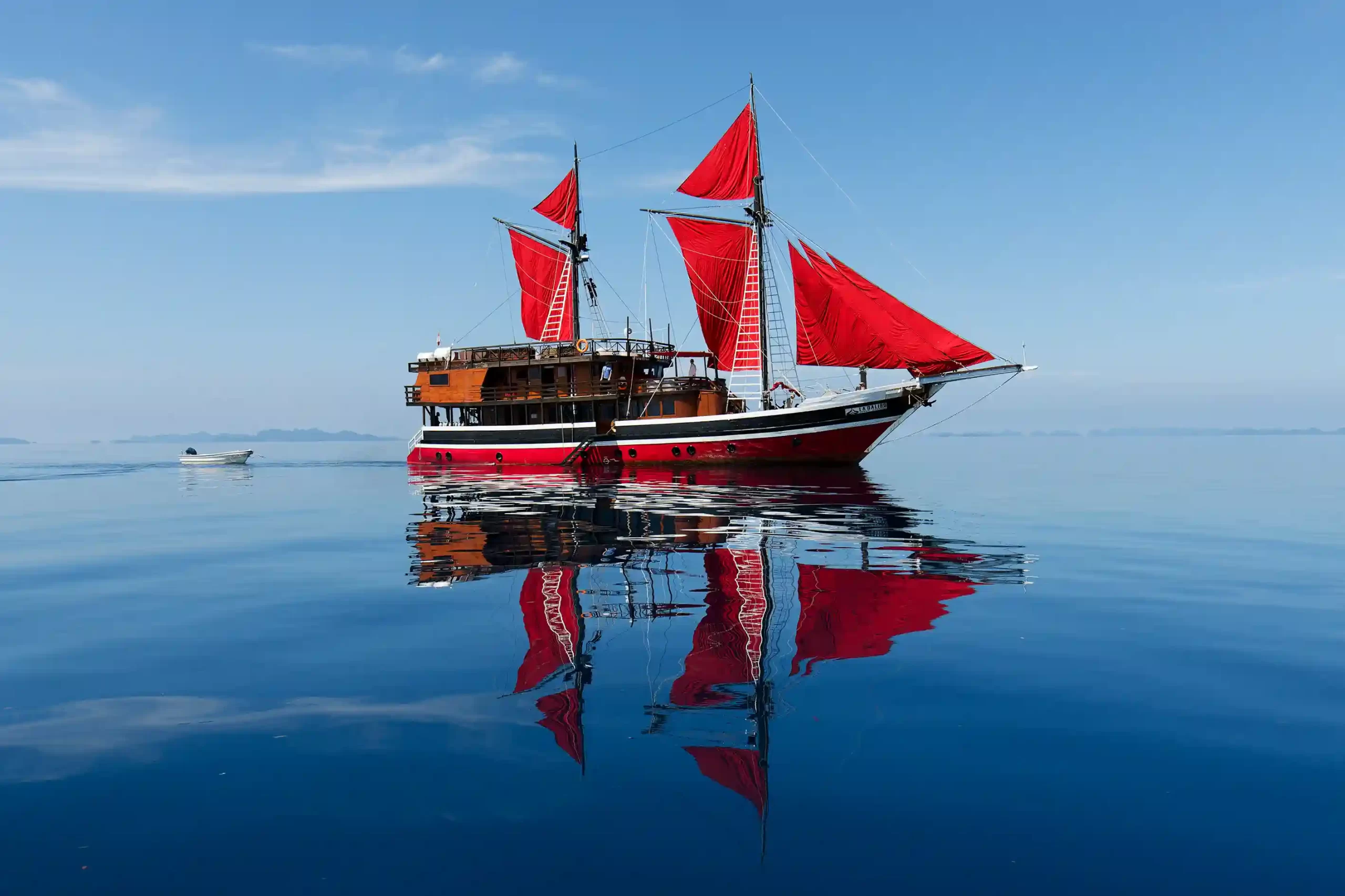
To understand the value of a modern charter phinisi, one must first appreciate its lineage. The art of phinisi boatbuilding is the domain of the Konjo, Bugis, and Makassan people of South Sulawesi, a maritime tradition so profound that in 2017, UNESCO recognized it as an Intangible Cultural Heritage of Humanity. For centuries, these gaff-rigged schooners, with their distinctive seven-sail configuration, were the workhorses of the archipelago, carrying timber, spices, and rice between distant islands. They were built by hand, on a beach, using rituals and techniques passed down through generations. The hull planks were joined without blueprints, relying on the master builder’s eye and instinct. Today, that heritage forms the soul of the luxury vessels plying the waters of Komodo and Raja Ampat. The fundamental construction material remains ulin, or Bornean ironwood, a timber so dense it sinks in water, providing exceptional strength and longevity to the hull. Teak, prized for its durability and beauty, is used for the decks and superstructure. But this is where tradition meets 21st-century marine engineering. The best phinisi for sale for private charters today is a hybrid masterpiece. Behind the hand-carved panels lies state-of-the-art technology: twin marine diesel engines from reliable manufacturers like Yanmar or Mitsubishi, providing a cruising speed of 8-10 knots; advanced navigation and communication suites from Furuno and Garmin; and the robust power generation and water-making systems required to support a five-star hotel experience miles from any shore.
Deconstructing the Ideal Charter Phinisi: Beyond the Glossy Brochure
As an editor, I’ve reviewed specifications for countless yachts. When assessing a phinisi for its charter potential, you must look past the aesthetic and scrutinize its operational DNA. The guest experience is paramount. A vessel designed for the high-end charter market will typically feature 5 to 7 spacious cabins, all with en-suite bathrooms, hot water, and silent, individually controlled air-conditioning. A master suite with a private balcony is a significant commercial advantage. The communal spaces are equally critical. Is there a comfortable, air-conditioned indoor lounge and dining area for escaping the midday heat? Are there multiple outdoor areas—a shaded aft deck for alfresco meals, a foredeck with daybeds for sunbathing, and an upper sundeck for sunset cocktails? For the Indonesian market, a dedicated, well-organized dive deck is non-negotiable, complete with compressors, personal gear storage, and easy water access. But what truly separates a good phinisi from a great one is the “back of house.” I always ask to see the crew quarters. A happy, well-rested crew of 12 to 18 people is the engine of a successful charter. Their accommodations should be clean, private, and separate from guest areas. The engine room should be immaculate, a testament to a diligent engineering team. A high-capacity watermaker, producing at least 5,000 liters per day, is essential. The galley must be a professional-grade stainless steel kitchen capable of producing gourmet cuisine for 14 guests, three times a day, for ten days straight. These are the details that dictate a vessel’s ability to generate repeat bookings and command a premium charter rate of $60,000 per week or more.
The Financial Blueprint: ROI and Operational Costs
Owning a phinisi is a passion investment, but the best acquisitions are also sound financial ones. A top-tier charter phinisi is a business, and it must be evaluated as such. The revenue potential is significant; a sought-after 6-cabin vessel in the 45-meter range can command charter fees from $50,000 to over $90,000 per week during peak season. A successful operator will aim for 20 to 25 weeks of charter per year, generating a gross revenue that can exceed $1.2 million. However, the operational expenditures (OPEX) are substantial and must be factored in with clear eyes. The largest cost is the crew. A professional crew of 15, including a Western cruise director, a dive instructor, and an experienced captain, can have a payroll of $20,000-$30,000 per month. Fuel is another major line item; a vessel can consume over 1,500 liters of diesel per day while cruising. Then there is the annual dry-docking—a mandatory period for maintenance, hull cleaning, and system overhauls that can cost anywhere from $30,000 to $100,000+. Add to this insurance, marketing fees, provisioning, and national park permits, and the annual OPEX can easily range from $250,000 to $500,000. When a vessel is managed efficiently and marketed effectively, owners can expect a net return on investment (ROI) between 8% and 12% annually. This figure does not account for the appreciation of the asset itself, as well-maintained, reputable phinisis have historically held their value well. Navigating these financial complexities is why working with a specialist to buy a phinisi yacht is not just advisable, it’s essential for a successful venture.
Location, Location, Itinerary: Maximizing Your Charter Appeal
A phinisi’s profitability is intrinsically linked to its location and itinerary. The Indonesian luxury charter market is dominated by two top-tier destinations: Komodo National Park and Raja Ampat. Each has a distinct character and seasonality, and a vessel’s design and capabilities should be suited to its primary cruising ground. Komodo, easily accessible via flights to Labuan Bajo (LBJ), is the bread and butter of the industry. Its season runs roughly from April to November. Charters here are typically shorter, from 4 to 7 nights, appealing to a broader client base. The draw is the iconic Komodo dragon, but the diving is spectacular, with famous sites like Manta Point and Batu Bolong. Raja Ampat, located in West Papua and accessed via Sorong (SOQ), is the connoisseur’s choice. Its season, from October to April, is opposite to Komodo’s, allowing a vessel to operate year-round by repositioning. This region, a sprawling archipelago of over 1,500 jungle-clad islands, is widely considered the global epicenter of marine biodiversity. According to indonesia.travel, it is home to over 75% of the world’s known coral species. Charters here are longer (10-12 nights) and command higher prices due to the remoteness and exceptional experience. The most profitable phinisis are those that can successfully operate in both locations, offering unique “crossing voyages” through the Banda Sea (the Spice Islands) during the shoulder seasons in March/April and September/October. These repositioning trips are a premium product, attracting adventurous clients willing to pay a premium for a rare itinerary.
New Build vs. Brokerage: A Strategic Decision
The path to ownership presents a fundamental choice: commissioning a new build or purchasing a pre-owned vessel from the brokerage market. A new build offers the ultimate prize: complete customization. An owner can work with a designer and a shipyard in Bira, South Sulawesi—the heartland of phinisi construction—to create a vessel perfectly tailored to their vision and charter strategy. Every detail, from the cabin layout to the choice of engine manufacturer, is under the owner’s control. This process, however, is a significant undertaking, requiring 18 to 36 months and a substantial commitment of time and capital, with costs for a luxury charter phinisi ranging from $1.5 million to over $5 million. It also demands rigorous project management to navigate potential construction delays and ensure quality control. Conversely, the brokerage market offers immediate gratification. Purchasing an existing phinisi means you can potentially be running charters within months, not years. A pre-owned vessel comes with a known history, a proven layout, and often, an established reputation in the charter market. One of the most valuable assets you can acquire with a brokerage phinisi is its crew; a cohesive, experienced team that knows the vessel intimately is worth its weight in gold. The downside is that you inherit the previous owner’s design choices, and a refit may be necessary to update interiors or systems. A thorough pre-purchase survey by a qualified marine surveyor is absolutely critical to identify any latent structural or mechanical issues. Whether you opt for the bespoke journey of a new build or the expediency of a brokerage purchase, the process to buy a phinisi yacht is intricate and demands expert, impartial guidance.
Quick FAQ on Acquiring a Charter Phinisi
What is the legal framework for foreign ownership in Indonesia?
Foreigners typically own and operate a commercial phinisi through a specific Indonesian legal entity known as a PT PMA (Penanaman Modal Asing). This foreign investment company structure is well-established and provides a clear legal basis for owning the vessel and conducting charter operations in Indonesian waters. Setting this up correctly requires experienced local legal and tax advisors.
How important is the crew in a charter operation?
They are, without exaggeration, the single most important factor for success. A top-tier vessel with a mediocre crew will fail, while a competent crew can make a good vessel truly exceptional. The trifecta of a highly skilled Captain, a charismatic and organized Cruise Director, and a creative, talented Chef determines 90% of the guest experience. Retaining top talent is a primary objective for any serious owner.
What are the key items to check during a pre-purchase survey?
A comprehensive survey is essential. Key areas of focus for a wooden phinisi include a thorough inspection of the ironwood hull for any signs of rot or marine borer infestation. The surveyor must also assess the engine hours and pull maintenance logs, test all electrical and plumbing systems under load, evaluate the condition of the generators and watermakers, inspect the age and integrity of the sails and rigging, and verify that all safety equipment—from life rafts to fire suppression systems—is certified and up to date.
Can a phinisi be used purely as a private vessel?
Absolutely. Many owners reserve several weeks a year for personal use. However, the entire financial model of the best phinisi for sale for private charters is built around offsetting the considerable annual running costs (which can be north of $400,000) through commercial activity. A phinisi intended for purely private use is a different proposition, often built to slightly different specifications and managed with a different cost structure in mind.
The journey to owning a charter phinisi is more than a simple transaction. It is an entrance into a unique world of maritime heritage, high-end hospitality, and shrewd investment. It is the acquisition of a floating asset designed to deliver both memorable experiences in the world’s most beautiful archipelago and a tangible financial return. The path from this dream to the reality of watching your own guests toast a sunset in Raja Ampat is complex, paved with logistical, legal, and operational challenges. This is where deep, specialized knowledge becomes the most valuable commodity of all. To navigate this process with confidence and explore the finest charter vessels currently on the market, your journey should begin with trusted advisors. Visit Buy Phinisi Yacht to view our curated portfolio and connect with specialists who can guide you every step of the way.