Commission a New Handcrafted Phinisi Yacht Direct From Bira Shipyards
Skip the resale market — commission your phinisi yacht direct from the master shipwrights of Bira and Tana Beru. We act as buyer-side project manager from yard selection through launch. 12-18 month build, USD 850K-6.8M, fully bespoke specification.

What “Direct From Bira Shipyards” Means Operationally
Commissioning a new phinisi yacht is a 12-18 month process from contract to delivery, costing USD 850,000 (32m / 4-5 cabins) to USD 6.8M (65m / 10 cabins) at top-tier Bira shipyards. Buyer specifies hull dimensions, rig configuration, interior layout, electronics package, and engine specification. Staged payment typical: 25% on contract, 25% on keel completion, 25% on planking complete, 25% on launch.
Most phinisi yacht acquisitions are mediated through resale brokers who add 8-15% to the cost basis through markup, financing intermediation, or marketing premiums. New-build commissioning bypasses resale intermediaries by going directly to the master shipwrights of Bira and Tana Beru villages in South Sulawesi. We manage the relationship, contract structure, payment milestones, and quality inspection on the buyer’s behalf — fee-only buyer-side representation, not a piece of the build cost.
- Build time
- 12-18 months
- Cost range
- USD 850K-6.8M
- Specification
- Fully bespoke specification
- Broker markup avoided
- 8-15% of the cost basis
Eight Active Bira Shipyards We Work With
| Yard | Specialty | Capacity range | Build queue (typical) |
|---|---|---|---|
| Konjo Boatbuilders | Premium 45-65m superyacht builds | 2 hulls/year | 14-18 months |
| Hadji Kalla Phinisi | Luxury charter 40-55m | 4-5 hulls/year | 10-14 months |
| Cv. Lambo | Mid-tier 35-45m, fast turnaround | 6-8 hulls/year | 8-12 months |
| Bira Heritage | Traditional construction, 38-50m | 3 hulls/year | 12-16 months |
| Tana Beru Maritim | Refit + new-build hybrid | 4 hulls/year | 10-14 months |
| Konjo II | Owner-direct, cost-optimised 32-42m | 3-4 hulls/year | 8-12 months |
| Anugerah | Charter-fleet specification, 38-48m | 4 hulls/year | 10-14 months |
| Ammana Gappa | Boutique 32-40m + tender builds | 2 hulls/year | 10-14 months |
How Bespoke Is “Bespoke”?
New-build commissioning lets you specify essentially every dimension of the yacht:
- hull length and beam
- draft and ballast configuration
- rig dimensions and sail wardrobe
- deck layout and tender garage
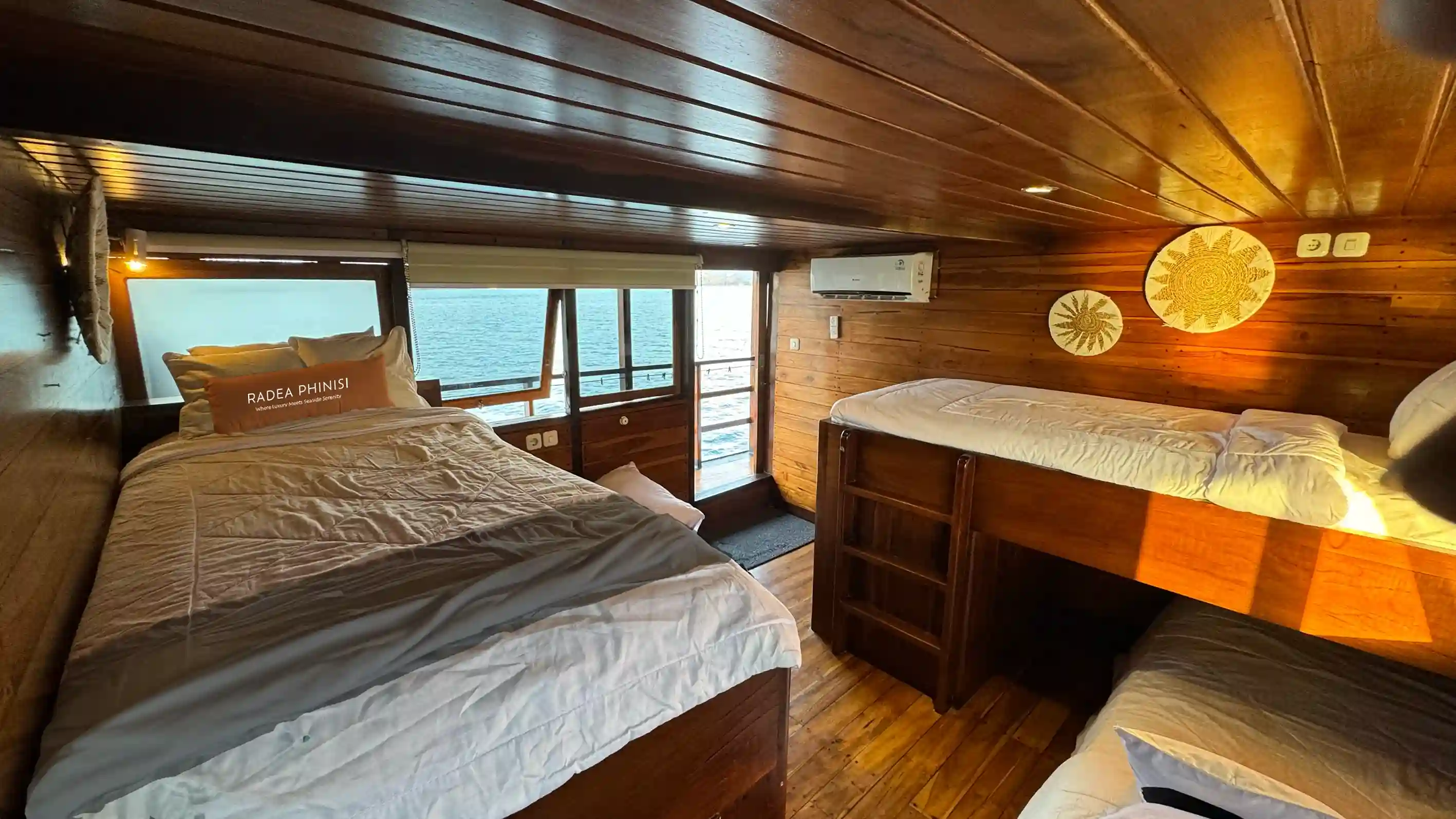
- interior layout (number of cabins, salon configuration, galley placement, crew quarters)
- interior finish (wood selection, upholstery, hardware, art programme)
- electronics package (navigation, communication, AV, satellite)
- engine specification (single or twin diesel, kW rating)
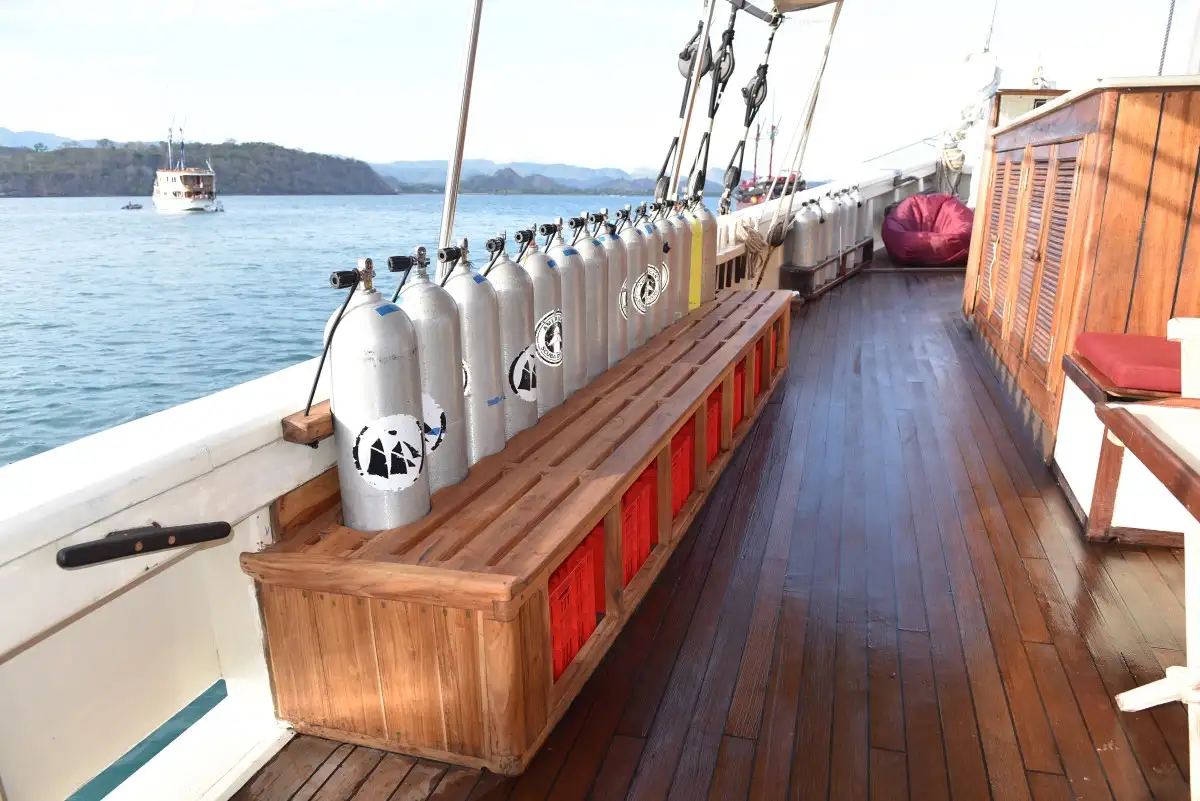
- ancillary systems (watermaker, generator, climate, refrigeration, dive compressor)
- tender selection
- exterior finish (paint, varnish, hardware)
The bespoke nature is what makes new-build commissioning attractive for buyers with specific operating requirements — charter operators optimising for cabin count, hospitality groups optimising for brand-photoshoot suitability, private buyers optimising for owner-suite quality.
Build Process Stages
-
Stage 1
Specification + contract (4-8 weeks before construction starts)
Detailed specification document (40-60 pages) covering all bespoke decisions, with master shipwright sign-off on feasibility. Build contract with payment milestones, completion criteria, and remediation framework.
-
Stage 2
Keel + frame construction (3-4 months)
Hull keel laid (typically traditional ironwood — Eusideroxylon zwageri), frames erected, exterior planking begins. Hull form materialises during this stage. We arrange buyer site visits at month 2 and month 4.
-
Stage 3
Planking + interior structure (3-4 months)
Planking complete, interior bulkheads installed, mechanical systems trunk installed. We arrange site visit at month 6.
-
Stage 4
Mechanical + electrical fit-out (2-3 months)
Engines, generators, watermaker, plumbing, electrical, electronics. We arrange site visit at month 8 for systems verification.
-
Stage 5
Interior finish + sails + commissioning (3-4 months)
Interior finish (woodwork, upholstery, hardware), sails delivered and rigged, sea trials begin. We arrange site visit at month 11 for final inspection.
-
Stage 6
Sea trials + delivery (2-4 weeks)
Builder sea trials, final remediation, formal handover. We accompany handover.
Payment Structure
Standard build contract uses staged payments: 25% on contract execution (covers keel material procurement, master shipwright wage advance), 25% on hull frame complete (covers planking material procurement), 25% on planking complete and interior bulkheads installed, 25% on launch and final acceptance. Buyer holds final 25% as performance security through delivery. Typical build cost is heavily front-loaded (60-65% in first two stages), so liquidity planning matters.
Stage Payments Into Escrow: The Structure That Protects You
The single biggest protection in a new-build contract is refusing the two-payment pattern (half now, half at launch) in favour of staged payments tied to verifiable milestones, ideally through an escrow arrangement or a protected account. A workable schedule for a phinisi build: 15% at contract, 15% at keel and frames inspection, 20% at planking complete, 20% at launch, 20% at systems commissioning, 10% retained until 30 days after sea-trial sign-off. Each release follows an inspection — yours or your representative’s — not the yard’s invoice. Yards with real order books accept this structure; resistance to any retention is itself due-diligence information.
The Builder Certificate File
New-build phinisi paperwork starts with the builder certificate (surat keterangan galangan) — the document chain that lets the vessel be measured, registered and flagged as new construction. The file should grow with the build: timber sourcing documentation, engine purchase invoices in the correct name, measurement survey at completion, then first registration in your ownership structure. Buyers who arrive at launch without this file assembled lose months at the harbourmaster. Our supervision keeps the paper building alongside the hull, and the ownership-structure decision itself belongs before contract, not after launch — the options are mapped in the foreign ownership and flag guide.
Commission a Build vs Buy New Ready Stock
| Factor | Commission (this page) | Buy New Ready |
|---|---|---|
| Time to water | 24–30 months | 2–6 months |
| Design control | Total | Equipment and cosmetics |
| Capital exposure | Staged over the build | Concentrated at purchase |
| Risk centre | Yard performance and timeline | Spec built for nobody |
| Best for | Specific operating concepts | Conventional charter plans |
- If the right-hand column reads like you, the new charter yacht desk covers yard stock, collapsed commissions and operator resales — the three sources of ready new tonnage.
The enduring allure of Phinisi yachts: A legacy reimagined
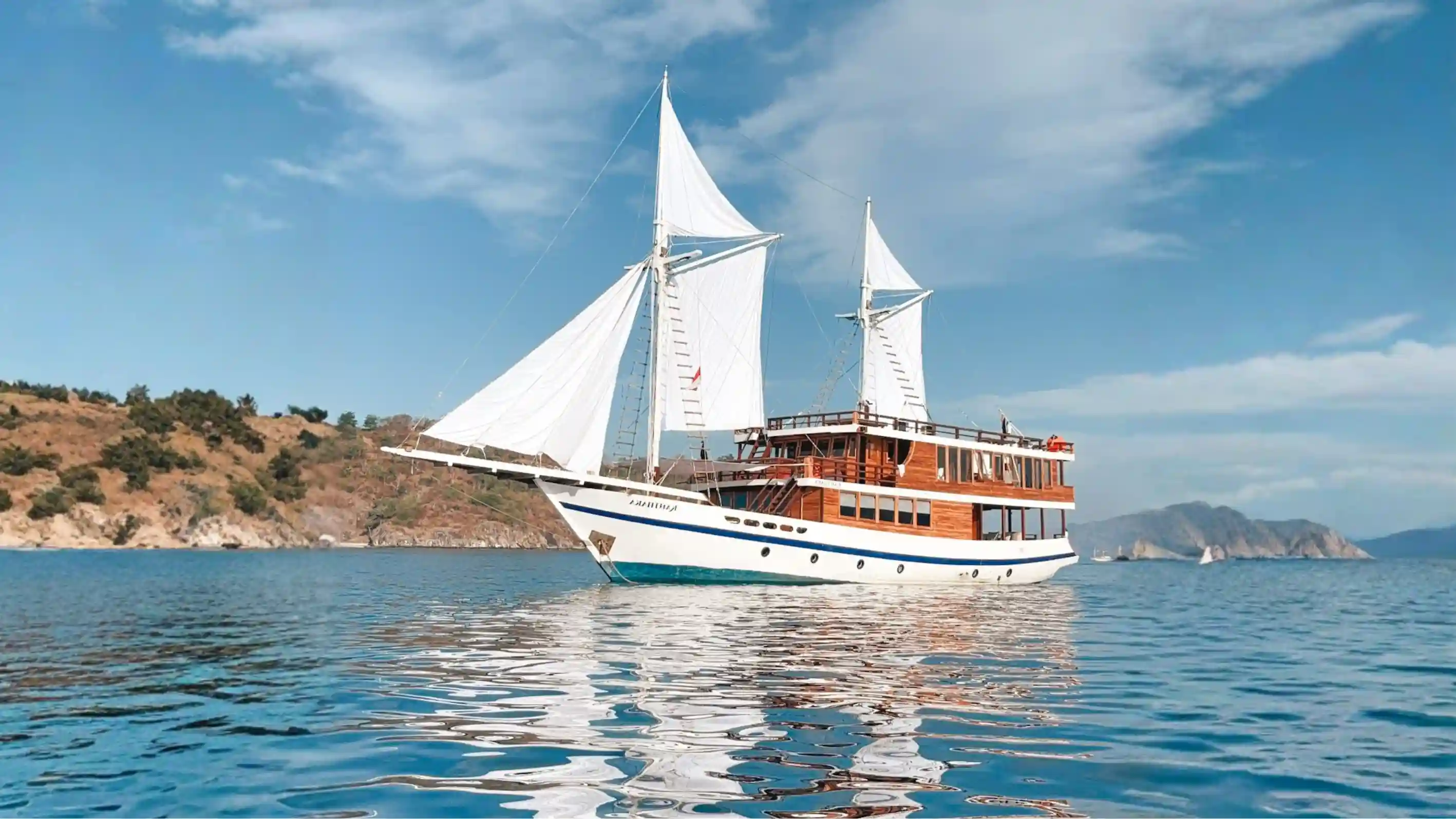
Imagine the scent of ancient timber mingling with the salty sea breeze as your custom-built Phinisi glides through the cerulean waters of Raja Ampat. Owning a Phinisi yacht is to possess a piece of living history, a vessel born from centuries of Indonesian maritime tradition. These magnificent two-masted wooden sailing ships are more than just luxury cruisers; they are a testament to the exceptional craftsmanship of the Bugis and Makassarese people of South Sulawesi. Their art of boatbuilding, recognized by UNESCO as Intangible Cultural Heritage, ensures each Phinisi is constructed with profound respect for age-old techniques, yet perfectly integrated with modern marine engineering and opulent comforts.
The very soul of a Phinisi lies in its construction, often utilizing indigenous hardwoods like Ulin (ironwood) for the keel and hull, revered for its natural resistance to rot and marine borers, promising a lifespan of 50 years or more with diligent maintenance. This meticulous selection of materials and the hand-carved details infuse each yacht with an organic warmth and character rarely found in contemporary vessels. While their traditional lines speak of a seafaring heritage, today’s Phinisi yachts are reimagined for the discerning traveler, offering a unique blend of authentic charm and state-of-the-art amenities, from sophisticated navigation systems to luxurious en-suite cabins and gourmet galleys.
Designing your dream Phinisi: Beyond the blueprint
Commissioning a new Phinisi is an intimate journey of creation, a collaborative process that transforms your vision into a magnificent reality. Beyond the structural integrity and traditional aesthetics, the true luxury of a bespoke Phinisi lies in its limitless customization. Our role extends to connecting you with top-tier naval architects and interior designers who specialize in blending Indonesian artistry with international design standards. You dictate every detail, from the layout of the spacious decks and the configuration of the guest suites to the choice of sustainable local timbers, custom furnishings, and even the onboard spa or dive center. This highly personalized approach ensures your Phinisi is not merely a yacht, but a floating extension of your personal style and travel aspirations.
The design phase is an exciting dialogue, exploring possibilities for everything from advanced entertainment systems and high-speed satellite internet to integrated water purification and waste management solutions, aligning with responsible luxury tourism. While the build is anchored in tradition, the interiors embrace contemporary elegance and comfort. Think expansive master suites with panoramic windows, private balconies, and open-air dining areas that invite the ocean breeze. A typical luxury Phinisi yacht can comfortably accommodate 10-12 guests across 5-6 opulent cabins, supported by a dedicated crew of 8-12, ensuring an exceptional level of service and privacy throughout your voyages across Indonesia’s more than 17,500 islands.
Life on the waves: Your private sanctuary in the archipelago
Owning a Phinisi yacht unlocks an exceptional freedom to explore the vast and vibrant Indonesian archipelago, a realm of dramatic volcanic landscapes, pristine coral reefs, and ancient cultures. Your Phinisi becomes a private sanctuary, a mobile base from which to discover the remote wonders of Komodo National Park, the kaleidoscopic underwater world of Raja Ampat, or the spice-laden history of the Banda Islands. Unlike conventional cruise ships, a Phinisi offers the agility to navigate shallow coves, anchor in secluded bays, and access hidden beaches, providing an intimate connection with nature and local communities that is truly exclusive.
The experience onboard is as enriching as the destinations themselves. With a highly trained, dedicated crew—including an experienced captain, gourmet chef, and expert dive masters—every aspect of your journey is meticulously curated. Indulge in bespoke culinary experiences, from freshly caught seafood barbecues under a canopy of stars to exquisite Indonesian and international cuisine tailored to your preferences. Spend your days snorkeling vibrant reefs, diving with manta rays, trekking to discover Komodo dragons, or simply relaxing on deck with a good book, the gentle rocking of the waves your constant companion. A Phinisi offers not just travel, but a profound immersion into the magic of Indonesia, creating indelible memories for you and your guests.
Frequently Asked Questions
01How early in the build should I start design specification work?
Design specification ideally begins 2-3 months before keel-laying. Detailed specification document (40-60 pages) covers all bespoke decisions. Master shipwright sign-off on feasibility happens during specification phase. Late specification changes (post keel-laying) increase cost and timeline; early specification is cost-efficient and reduces build-stage friction.
02Can I modify specifications mid-build if I change my mind?
Limited modifications possible at additional cost. Major structural changes (hull dimensions, mast position, primary bulkhead layout) effectively require restart and are usually not feasible mid-build. Interior layout adjustments at fit-out stage (Stage 4-5) possible at moderate additional cost. Finish-level changes (wood species, upholstery, hardware) feasible until late in finish stage. We document modification protocols in build contract upfront.
03What is a builder certificate and why does it matter for a new phinisi?
It is the yard-issued document chain proving the vessel is new construction of known origin — the foundation for measurement, first registration and flagging. Without it, registering the finished vessel becomes a slow forensic exercise. Insist the file is assembled progressively during the build.
01What payment schedule should a phinisi build contract use?
Five to six milestone payments tied to physical inspections — contract, keel and frames, planking, launch, commissioning — with 10% retained until after sea-trial sign-off. Never the half-now-half-at-launch pattern: it concentrates your risk exactly when you have the least verified information.
02How do I supervise a phinisi build from overseas?
Appoint an owner’s representative who inspects at every payment milestone with photo and report documentation, plus video walk-throughs between milestones. Flying in for keel laying, planking completion and launch — three visits — covers the decisions that cannot be delegated. Payments release on inspection, never on schedule dates.
01Can I convert an existing cargo phinisi instead of commissioning new?
Yes, and it can cost 40–60% less if the donor hull surveys well — but conversions inherit the hull’s history and surprises surface mid-refit. Commission when your concept is specific and your timeline tolerant; convert when budget leads and a strong hull with honest survey results appears.
Speak With Our Buyer’s Team
Two offices — Bali and Labuan Bajo. Our team responds within 4 business hours, weekdays. Confidential, no obligation.